A little while ago, I ran into a South Korean movie called Milyang – which translates into “Secret Sunshine”. As Usually I’m a bit weary of Asian movies (they tend to go on forever), but this time I would not get stopped and was determined to check it out. And I’ve got to say that, even if it did run for 142 minutes, I did enjoy it a lot. Maybe I’m maturing? Nah, it’s probably just that this movie is really good.
The Eternal Downwards Spiral
Other than a basic theme (“coping with tragedy”), it’s near impossible to say what this movie is about, exactly. The premise is quite simple: Sin-ae, a thirtysomething mother, moves with her son Jun to Miryang, the town where her dead husband was born. After that things get a bit hairy – things happen and happen and happen, much reminiscent of that other thing people try to show us in the cinema so often: life.
That’s just about it, really. You can’t really say that this movie tells a certain story, because it doesn’t. Picture Magnolia – a handful of characters which are linked share the theme of “redemption” in their storylines which other than that have nothing to do with each other – but remove the “handful of characters” bit: all these stories just happen to this one woman (performed by the more than great Do-yeon Jeon, who does an awesome job at convincing us that it’s all real), all after another.
In All…
I like that: it’s a kind of unusual way of storytelling and we were really wondering how it would (or could) go on at certain points throughout the film. The end of the movie fitted the feeling that we were granted a small look into someone’s life – a look without a firm beginning or end. You get a picture and you can check it out, but you can’t see it all. You can only see what’s in the frame, not what’s on the edge, or the moments leading to the taking of the picture. All you can do is invent those occurances as you see fit.
One little disclaimer though before I send you off to the movies to watch this: it goes to the bone. It never goes beyond that, but it does get pretty dramatic. Oddly enough though, me nor the person with whom I watched this movie, felt really bad afterwards. We just both fell silent, and had to think about it for a while. Interesting.
Whenever a new Tarantino movie hits the silver screen, I’m a bit cautious. You see, I’m not a big fan of his work. I don’t really respond all that well to unnecessary realistic violence in movies (case in point: I tend to dislike Zac Snyder movies too). But there’s the thing: the violence featured in Inglourious Basterds is neither unnecessary nor realistic. So I found myself enjoying this movie a lot more than I thought I would.
Wolfenstein meets Little Red Riding Hood
The story consists of two different storylines: one tells the tale of the Inglourious Basterds, an allied terror unit in World War II with as a single goal killing (and scalping) Nazis. The other revolves around a Jewish French woman and the plans of having a big Nazi premiere there. Both storylines obviously come together at the end, but before that there is a lot of frolicking around in typical Tarantino fashion: with loads of dialogue, resulting in violence.
At first, the dialogues were reminiscent of Death Proof – which I disliked thoroughly. Soon, however, one could tell the big difference between Death Proof and Inglourious Basterds: the cast. This wonderful cast actually carries the insane amounts of insane dialogue, instead of getting carried away by it. Some of the more complicated lines – in four languages nonetheless – were uttered by Christoph Waltz. It was obvious he had studied them thoroughly and knew what he was doing. Stunning, stunning display.
Once upon a blabla
Inglourious Basterds tries to be a bit of a fairy tale. It never tries to be realistic, but keeps the setting correct so it’s credible enough. You know the events at the end of the movie never happened, but – in the world of Tarantino himself – they could have happened (but hell could also freeze over). Also, you don’t really relate to the characters (a thing I’ve actually never done in any Tarantino movie, come to think of it) – whether they live or die, it’s the same thing. You just hope they go out with a bang.
[spoiler]I do have to say though: the Basterds killing Hitler? The manchild in me says that’s pretty awesome. Even though the whole burning cinema fire was poorly executed, littered with continuity errors and a display of very, very bad taste in humanity.[/spoiler]
So it’s a bit of a side story. In that way, it’s a smart plan of Tarantino’s to cut the story into five smaller bits – chapters. Sure, fine and dandy, but this does not work if your first three chapters combined are the length of the fourth or the fifth respectively. The first three chapters felt like introduction, and it wasn’t until the last two that the audience could see where Tarantino was going with this. Had this been an unknown director, he wouldn’t have gotten away with it, I think.
In all…
Even though I dislike Tarantino’s movies, I would recommend you go and see this one. It’s pretty fun. The violence has been kept to a minimum, and this time around, it’s not about wildly ejaculating but all about the build-up to the orgasm. Scenes go on for ever as you can feel the tension slowly rising. It’s something I have rarely seen with Tarantino; he’s usually so gun-ho that the load has already been lost before the thing even got off the ground.
And yes, you can go Freudian on that.
Favourite Quote: Lt. Raine: Donny! Got us a German here wants to die for country. Oblige him.
I’m starting to see an emerging pattern here. You see, I liked Harry Potter and the Goblet of Fire a lot, but other people hated it. And, now I like Harry Potter and the Half Blood Prince a lot – and yes! There is a lot of hate once more. Why the hate, people, why the hate? This movie does the thing a penultimate movie ought to do, and it’s the one movie to stay – in my opinion – closest to the book in style and substance (and if it does stray, I think it’s justified).
Lookit the pretty pictures!
Let me say this first: for me, this is without a doubt the prettiest Harry Potter movie to date. Yes, I consider it to be even prettier than the much lauded Prisoner of Azkaban. Yes, that movie was the best and it was the greatest and so on, but in all fairness it did notlook as good as this one. Obviously, this one builds rather heavily on Azkaban in art style – moreso than the two previous ones. There are some shots in here that are almost art.
Oh, but dear writer, we know you know nothing of art! Well, you’ve got me there. But when I looked at certain shots, I saw a fan of surrealism – of Magritte. Most of these shots revolved around Draco Malfoy – more on him later – or his immediate surroundings. His black suit, the houses his mother was running through on her way to a certain someone, the vanishing cabinet… they all looked nightmarish and absurd. And unbelievably pretty. It gives me hope that David Yates could actually save the last book. But then I remember a thing called “wand lore”.
And it has to be said: Nicholas Hooper did a great job composing the music for this film. It fits the mood perfectly. Some other movies had great soundtracks as well (I’m thinking Azkaban and the Goblet of Fire), but this one was a lot better than all the others. It has something magical – just like the movie has something magical, something indescribable that the other movies don’t have. The magic feels more… fresh and new – but ancient at the same time. As if it were a character on its own, symbolized into Dumbledore (this you can see clearly in the first scene, when he appears in front of “Magic” billboard).
Snogging! Snogging!
I remember watching “The Life Aquatic” a while ago and feeling like a little boy watching National Geographic again. The Half Blood Prince made me feel like I was 16 again and in the prime of my hormonal youth. For me, this movie re
ected the book perfectly – I remember feeling like that as well when reading it. Lads and lasses, you have to admit one thing: these books are littered with useless but funny little tidbits. If you’re complaining nothing’s happening, then you haven’t read this book right. It is a book about snogging. It’s one of the things Rowling used to mask the fact that the end is highly dramatic. Don’t blame the movie for staying close to the book.
That’s what this movie does: it stays very, very close but looks for artistic freedom elsewhere (design, composition…). There is – as far as I can remember – only one scene that is truly added, and it occurs near Christmas day at the Weasly’s house. I thought it was pretty. And it’s obvious they want to give the wonderful, wonderful actress Helena Bonham-Carter a bit more screentime. She is one of the only stars that is left in this series who is not either in diapers or wrinkled and old.
Speaking of stars: the indeniable acting hero in this movie is Tom Felton, playing Draco Malfoy.
It’s like the story gave him a little more leeway and he shoved everything he could into that. He plays the tormented killer role wonderfully: he’s jumpy, eager, anxious and also a frightened little boy. In the final battle, I couldn’t help feeling more pity for him than the actual victim. It sets up the final book perfectly, and I can’t wait to see Felton playing what’s still in store for his character. But by that time I’ll probably be too busy cheering Neville on.
The person I was slightly disappointed in was Snape. Alan Rickman was great – as per usual, as per usual – but he’s gotten way too little screentime. I have no problem with the added scenes, but Bonham-Carter’s additions might have been better used as Snape time. It was as if the first half of the movie was trying so hard to set him up as a vilain and the second movie the exact opposite. That just didn’t work for me. I guess they’re trying to form a bridge, some sort of an actor generation pact thing: the older actors are passing the torch on to the new ones. Quite a burden to bear – these movies have showcased some of Britain’s most gifted actors.
In All…
This movie nails it. It’s the part in the series that’s come closest to the feeling of the book. The humour makes you laugh out loud, the drama makes you fight the tears. At times, it shocks you; at times, it warms your heart. Just like the book, really. But it triomphs in one place the book fails: execution. Rowling might have designed great characters and a truly magical story, she’s simply not the best writer out there. Why should eyes always be raven black? This is where The half-blood Prince succeeds: it’s a truly stunning visual feast. And I don’t mean the special effects. Although those are obviously nice too. Hum.
It just goes to show what poor initial reviews from the test audience can do to a movie: six months more development, and there you have a well-polished piece of art. If only this were standard…
Favourite Quote:
Hermione: Hey, she’s only interested in you because she thinks you’re the Chosen One.
Harry: But I am the Chosen One!
Let me tell you this first: I loved Les Choristes. I own it on DVD and now and again I pop it into my DVD player. It’s the subtle mixture of characters and storyline with music that gets it: if the characters don’t cut to your bone right at the start of the movie, then they will do when they start singing. It’s one of the reasons I wanted music to have a dominant role in Vlaams Filmpje – and lo and behold: it worked. People like singers.
So picture my amazement when I walked past the DVD store and found this: a movie named Faubourg 36, of which I had not heard before. But with names so well-known to me that you could well say that it’s a sequel to Les Choristes, set in the past (If you haven’t seen this movie, you best forget that sentence unless you want to confuse yourself throughout).
Like cotton candy
The premise of Faubourg 36 is pretty simple: after a desastrous maffia-filled New Years Eve of 1935, three members of the variety theatre “Chansonia” try to save their second home by reopening it on their own account. Somewhere in there are three love stories (two of them in a triangle), educational themes, socialism… It’s a pretty full movie, which sometimes feels a bit all over the surface and scared to go into the deep, but manages to bring every story to a conclusive and satisfying end.
It’s not the story that sucks you in, though – it’s the world. The production team apparently recreated the entire Faubourg area in an abandoned field somewhere around Prague – and did so wonderfully: the movie world is so undeniably credible that it sucks you in from the moment the camera pans over the “CHANSONIA” letters, dismounts and follows Pigoil inside (a shot that lasted about three minutes and was a true work of art). It feels like its predecessor (an isolated world that lives next to a bigger one, with the emphasis on “next to”), but at the same time it feels like Baz Luhrmann’s Moulin Rouge – without the Luhrmannian kitch. The redness of the drapes, the whiteness of the snow… it’s a stunning looking alternate universe.
By the Sea
However, as I already pointed out in my way-too-long opening to this review, those elements are both overshadowed by one thing. For the first half hour, you like the characters – or in fact sometimes get annoyed at their attitudes. But you like them nontheless. Then, however, comes the singing, which completely catches you off-guard and makes you love them. They don’t actually all have good voices (except for Douce, who sounds stunning) and that’s exactly the closing deal: they’re natural. They sing like you and I do: under the shower, in the car, with gusto. Right from the heart. It’s great!
The thing is, I don’t know if it’s like that for everyone. I mean: it could be. Somehow, I doubt it though: there must be people who don’t get sucked in by this – even more: who puke just at the thought of hearing grown men sing on screen. But then again: is this the kind of movie for those people? Should I take those into account when writing this? I mean: if you glance even for a second at the DVD cover, you know what you’re in for. You were warned.
In all…
This is a movie I’ll be watching again and again. Sure, the plot is a bit hairy and at times it steps right beyond the line between drama and melodrama, but in the end the whole is so consistent that you cannot help but being sucked into this film’s crazy semi-parallel universe and it’s addictive music and dancing. If you don’t like music (or especially French Chansons), you should steer away from this at all costs though – you might get hurt in the progress.
I’ve been trying to brush up on classics lately. In doing so, I found a pretty awesome Hitchcock DVD box on Amazon and ordered it immediately. So now, I’ve been watching Hitchcock movies – in chronological order. I have to say: they’re not all good, but if they’re good, they’re great!
Shadow of a Doubt follows the adventures of Charlie and Charlie – one of them being the uncle-from-the-city, the other being the small-town-niece. The uncle, a nervous wreck, decides to take a trip to his niece and her family into the country. Why exactly he wants to do so, is a mystery that slowly gets unraveled into a thick plot of epic proportions.
The movie is from 1942, but bears almost no resemblence to another Hitchcock movie made during the second World War: Saboteur. Sure, there is a good mystery plot in there, but the scope of Shadow of a Doubt is so much smaller – which makes it into a much better, much more concentrated film. Everyone can write a conspiracy plot – it’s become a genre by itself in the USA – but a small family drama… you need to get the characters just right for that, and that’s exactly where Shadow of a Doubt succeeds: Wonderful characters going through great evolutions.
The movie looks (and sounds – great use of walzes) brilliant – even back then, Hitchcock already made some shots that made my mouth water with esthetic delight. I love how Shadow of a Doubt makes the best of the framework it’s in – something I’ve rarely seen in movies from that age. Put all the pieces together and the whole starts feeling like a typical Hitchcockian nightmare. Slightly surreal but real enough to drag you in.
In all…
The bottomline is: if you want to see a Hitchcock movie and you’ve never seen one, this one is pretty good as a starter. I myself started with Vertigo (which I will review sometime), but the symbolism and freakiness got lost on me because I didn’t know enough about the creator’s signature. Shadow of a Doubt is a bit less to look at, but everything is there (and counts in small amounts).
Favourite Quote:
Joseph Newton: We’re not talking about killing people. Herb’s talking about killing me and I’m talking about killing him.
When I read that J.J. Abrams was rebooting the Star Trek franchise, the first thought to rush through my mind was “Oh God”. Now this doesn’t mean much. I know. In fact, I didn’t know myself what I meant with it. On the one hand, I was psyched to have another Abrams movie coming. On the other hand though, Star Trek brought back memories of static acting, bad backdrops and overweight people in wheelchairs pressed into insufficient amounts of spandex spouting Klingon insults (yes, I have been to a con or two in my life).
After a while, however, and after having seen the magnificent trailers, the idea grew on me, and I realized that I actually didn’t know as much about the Star Trek universe as I thought I did. Star Trek (2009) could be my way in – I could sneak in through the back door and ignore the history the house-in-renovation had. And I’m glad I did.
Kirk and the Battle of the Bar Brawlers
In typical Abrams fashion, the bottom layer of this movie (the part of the cake that then gets topped with cream and all that good stuff) are the characters. There’s Kirk, your typical wild boy bar brawler, and on the other side of the spectrum, Spock, the condensed smart-ass with a temper perfectly hidden inside of him. These two characters alone could have their own movie, but instead they are supported by a whole bunch of underused characters (sequel! sequel!): a black chick, a chinese dude, a russian guy, a scotish lad… The list goes on. And screams SEVENTIES in my ears at a deafening volume.
Just like a lot of J.J. Abrams productions, the two main characters would get along fine if it weren’t for this one little hick-up. In the case of Star Trek, we’re talking control: should you follow your gut or think things through before going for it? Obviously, the answer is somewhere in the middle – and that’s the moral of our story. No biggie.
You’re gullible, McFly!
If you go watch this, do not expect to be blown away by the depth of the story. In fact, if you expect any kind of earnest story at all, you risk being disappointed. Star Trek seems to wander the path of Back to the Future and Indiana Jones by mocking the very thing they’re trying to convince you of. Star Trek, whilst being an awesome movie, gets quite absurd at times, uses every cliche in the book, but it’s all done with such
air and a tongue-in-cheeck attitude that you let things slide. Even if they seem to make certain errors in their own mythology. It’s all in the paradoxes.
So for those expecting to have a deep experience, you’re out of luck. The space theme is kind of passé now compared to the seventies (I groaned when I first saw a space ship in this movie), so I guess this is one of the more interesting way to still tell these kind of stories. You just need to make sure the characters are fresh and interesting… and mildly funny (even if unintended).
In all…
If you’re going to reboot a franchise, you gotta do it right. You need a careful mix of things that aged well (from which you stay far, far away) and new things to replace those that haven’t aged well. Oh, and in the case of Star Trek, you apparently also need to set up an alternate universe.
Is it that time of the year already? It seem like only yesterday when Season Five made its flashing debut with Locke asking Richard the question: “When am I?” Now, the Richard story comes full circle as the newly resurrected Locke sends good old Alpert in to save Locke’s life. Now we know how Richard knew. He was telling the truth all along. ” You told me.” And now we know the significance of the compass to Richard. “It points North, John.” Simply awesome. That compass has been floating through space and time with no one to have created it. Awesome.
I can’t say this episode was breathtaking. It was set-up, just like every year: a very strong episode that leaves the big reveals to the next one. Jacob. Jughead. The statue. Its shadow. The undoing of the entire series so far. And, while the story tags along: probably something interesting about Richard Alpert. More on that in my conclusion.
John Locke isn’t John Locke anymore. He’s new and improved, a sort of John Locke 2.0. While watching this episode, I couldn’t help but notice that Jack seems to have become the new John Locke: strolling through the jungle, doing crazy things and believing in destiny. I like this new Jack. And is it just me, or has Kate become a wall
flower – or just the new Jack? When Kate entered the sub, Sawyer and Juliet tossed each other a “we have to travel with her?!” kind of look. I loved it.
I don’t like Kate and I like how everyone seems to acknowledge that. Kate’s definitely been the most annoying character of the season so far, and I think I’ve pretty much given the character her final chance. She’s got to do something really spectacular in the finale to get on my good side again. I hope Sawyer stays with Juliet. I hope they have cute blond little seventies babies. I want to see those babies.
The Questions…
Did the Losties end up on the island by coincidence? I think this question is starting to get a bit shaky, and pretty much boils down to your definition of “coincidence”. If we live in a world made of course-correction and determinism, does coincidence still exist? In a way, the entire run of things was a coincidence: the incident, Desmond, the crash… But if you look at it differently, it was meant to be: it was destiny – predetermined to happen. What a literary question – unheard of in a mainstream TV series. Let’s see if they explore this further in the finale.
An important question going into the finale will be the identity of Jacob. Locke’s statement that he wanted to kill him crashed on us as a bomb, but in a way it’s not that crazy. For the last three seasons, Jacob’s been an invisible force, a sort of anti-God, making the Others do certain things. Or is it the other way around: do the Others do things, and say it was Jacob will? In either way, Jacob has definitely derailed into something decadent. Or has John’s resurrection put him on a different side? An anti-Jacob side?
In All…
There were three leaders in the last episode. There was Jack, looking for the bomb. There was John, leading his people on a mission to slaughter a God. But in my opinion, the real leader of this episode was Richard Alpert. And – in both times – he’s not feeling good. He’s not feeling good at all. His authority and good reasoning is being questioned, and he knows nothing good will come of it. Is Richard also one of the walking dead? Did he come from the Black Rock?
Favourite Quote:
Juliet: I love you.
Sawyer: Well I love you back.
There you have it. Another layer has been added to Sun and Jin’s ever changing backstory. Now we know who Sun learned her English from. And the tragedy that made their already rocky relationship even worse: infertility. So… the island is apparently to Jin what the Nyle is to Kanaan: a huge boost in cultivationability. If that is even a word. It should.
It appears that Henry Gale (from Minnesota) is not the nicest of people. But then again: how would you be if you had experienced the things he had? First he gets shot by an arrow, then beaten to a pulp. I’d get a bit cynical too if that’s the way I can control the people around me. Stellar, absolutely stellar performance at the end. I wonder what Sayid, Ana-Lucia and Charlie will find?
Was it just me, or was there a very long pause when Jin asked Sun whether the baby was his. Obviously, if she’s been with someone else, she can’t know whose baby it is if she’s only found out about the pregnancy while on the island. Somehow I think the title of the episode is misleading. We have yet to find out the whole truth.
Oh my God. Oh my God. Oh my God!! When Damon Lindelof and Carlton Cuse teased this episode as being The Constant’s brother, I held my heart in anticipation: no way an episode can be as good as The Constant when it’s been announced as being so. So I shrugged and forgot about it.
But Oh My God! This episode really was exactly what they told it would be. It delivers loads of answers, builds up to the finale in a way I could not have imagined, and it’s so dramatic on a whole new level. Too bad poor, poor Daniel Farady had to die for it.
And that was the brilliant part. Sure, if you watch the episode a second time, you can see it coming about three minutes in. But the first time you’re watching, you’re thinking that they possibly cannot kill Farady. It cannot happen. Farady is Season Five’s Libby. You think he’ll make it… but he won’t.
Right before Faraday died, he revealed it all: that there’s more than just constants in this world. That there’s variables – people. Kant and Rousseau would be pleased to hear Faraday’s words. Does this mean everything up till now has been in vein? That this destiny stuff will be wrong? That they will detonate Jughead and the first five seasons will have never happened?
In my opinion, that is very likely. I mean, there’s a few different roads the finale could walk. First of all, the bomb could not explode, making their efforts useless and showing us the whole constant/destiny thing again. Second, the bomb could explode but it had always exploded. This would basically define the “Whatever happened, happened” thing this season seems to have.
In my opinion, they oughta walk the third, daring line. And I think they will. The bomb will explode. And the crash of Flight 815… will have never happened. Once again, people who read this theory dismiss it as jumping the shark. But didn’t they do that when the flashforward thing got out? And when the frozen donkey wheel got out and the island disappeared? We are looking forward to a finale of epic proportions.
The Questions…
We finally know all there is to know about Farady. Except for the book. Was the book truly just a notebook he kept because he had memory problems? I was kind of thinking he had been traveling through time and had given the book to himself at some point. But seeing how he’s dead… my theory doesn’t have much chance anymore.
In All…
This was easily the best episode of Season 5 so far. In fact, it might be one of the top episode of the series ever. It’s up there with The Constant, that’s for sure. I just can’t get over the shock effect of Eloise killing her own son. And knowing about it all of her life. And still not letting the poor kid playing the piano. Bitch.
Favourite Quote:
Young Daniel: “But I want to keep playing the piano. I can do both. I can make time.”
Eloise: “If only you could.”
Well, apparently it can be done. Flashbacks can also happen to stuff that happened on the island. It’s a nice mechanic, and I feel that the explanation of what happened to Claire after her abduction by Ethan was a satisfying one. They were trying to get the baby out alive, but didn’t really care about Claire’s well-being. Well, I’d like to believe Ethan does, but he’s just a cog in a bigger system it seems. Like how he answers to beardless Mr. Friedly, for instance. Interestingly, this showed Ethan in a completely different light. Apparently there’s more to him than just a Jungle Brawler – he has a soft spot for Claire. I wonder what kind of sickness he felt he was protecting Aaron from?
This episode shed a bit of light on the Others. So they are using the Dharma Initiative medical station for their own cause. Also, they are masters of disguise – which is great. It means they’re not just savages tromping through the jungle eating babies and dragging their teddy bears as trophies. Big relief that was. I’m kind of amazed that the medical station was empty. Why did the Others leave it? Did they leave it at all? Or are they just trying to make it look deserted, just like they dress up and play savage?
We saw Rousseau’s daughter Alex! …At least, I think we did. It would make sense that the sixteen year old girl that looks exactly like Rousseau is in fact her daughter. I wonder if she knows anything at all? She seemed really nice – she saved Claire’s life together with her mother. How’s that for a nice metaphor?
Favourite Quote:
Claire: So, you’re a shrink, right?
Libby: I’m a clinical psychologist, but “shrink” works, too.
 A little while ago, I ran into a South Korean movie called Milyang – which translates into “Secret Sunshine”. As Usually I’m a bit weary of Asian movies (they tend to go on forever), but this time I would not get stopped and was determined to check it out. And I’ve got to say that, even if it did run for 142 minutes, I did enjoy it a lot. Maybe I’m maturing? Nah, it’s probably just that this movie is really good.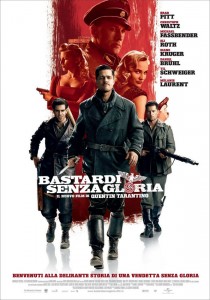
 The Movie…