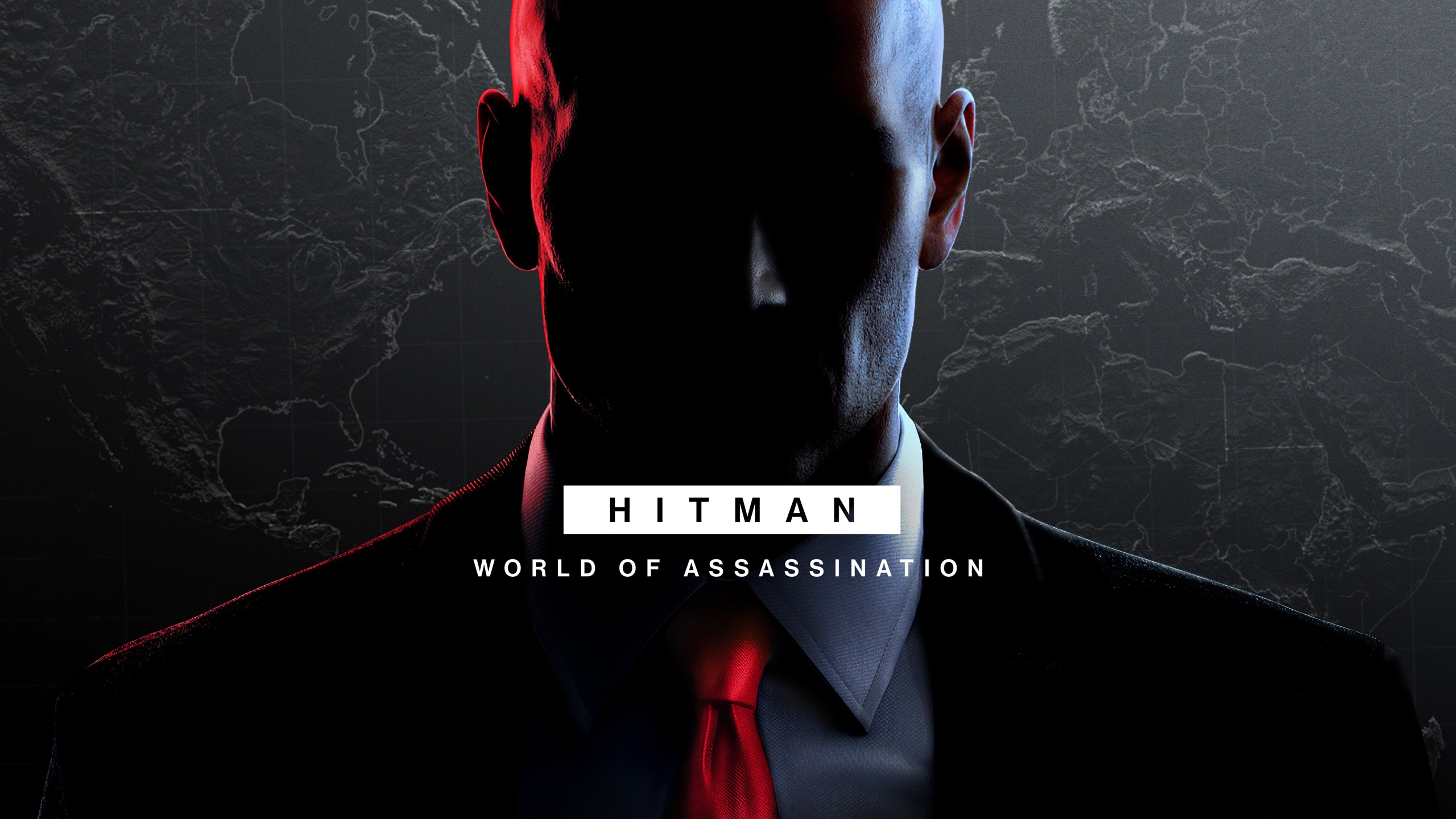
Imagine this: my most-played game since 2018 is a game in which a memory-wiped hitman travels around the globe to assassinate the world’s worst assholes. He then gets pulled into a crazy conspiracy plot that confronts him with his past, flips the secret organisation he’s working for on its head and forces him to answer to question: Who am I?
Yeah, I wouldn’t think so either. But while Hitman is, on the surface, all of these things, it’s actually a game in which you can also dress up as a clown and assassinate your targets with a well-thrown fish. It is nothing short of amazing.
This is how you CAN play.
So here’s the gameplay premise: You choose a location. This can be anything from an old English manor to a high-tech AI-controlled Japanese hospital. The location has targets. You then plan a load-out (silenced gun, poisoned syringe – there’s hundreds of possibilies) and after, it’s go time. You choose how you will approach and eliminate your target – preferably without collateral damage and without things going wrong (spoiler alert: things always go wrong).
Do you knock out their bodyguard and dress up like them? Or do you just barge into the room and throw a grenade at them? Of course, you’re very squishy – when you get caught, all guns are pointed at your and you (usually) die. The maps oftentimes feel like clockworks: After a while, you start to remember the patterns, the patrol routes, and you start to understand: If I remove this guard here, then my target will enter this room all alone, and I’ve got plenty of time for my kill…
But while the feel of starting to understand how the levels work is fun, it’s not the main reason why I’ve logged over a hundred hours in this game. The reason why this game is so good: It’s very liberal in how you can approach these deaths. Like, very liberal. Sure, I can play it straight, but the comedy options are way more fun. Does your target patrol through the kitchen? Well, there might be a lethal banana peel trap there. Target is a pop singer? I can become his drummer. And surprise – I’m not just any drummer, I’m a bald dude with Dave Grohl levels of talent.
This is how you SHOULD play.
In short: Hitman is a black comedy masking as a 24-style thriller. There’s no game quite like it – and it’s amazing.
Here’s two random things I feel conflicted about that suddenly collided at the tail end of 2022: Netflix and Tim Burton.
Concerning Netflix: If they are the future of streaming, I don’t want anything to do with it. For every interesting good thing they put out, there’s at least five weird, trashy ones. I honestly hate the idea of dropping a season in its entirety – mostly because I love TV show watercooler talk and it’s pretty much my only way to engage in small talk without feeling awkward – and because I think it’s a financially terrible model. TV shows are hella expensive, that’s why they stretch them to infinity, yo!
Concerning Tim Burton: please see this 2012 review for Dark Shadows or this 2010 review for Alice in Wonderlands. Tim Burton is, to me, a visionary who can create wonderful things – but who needs artificial restraints. Ever since CGI has become a standard thing in movies, Burton has lost most of its appeal because everything is possible. And when everything is possible, Burtons movies lose every sense of cohesion. They are all over the place.
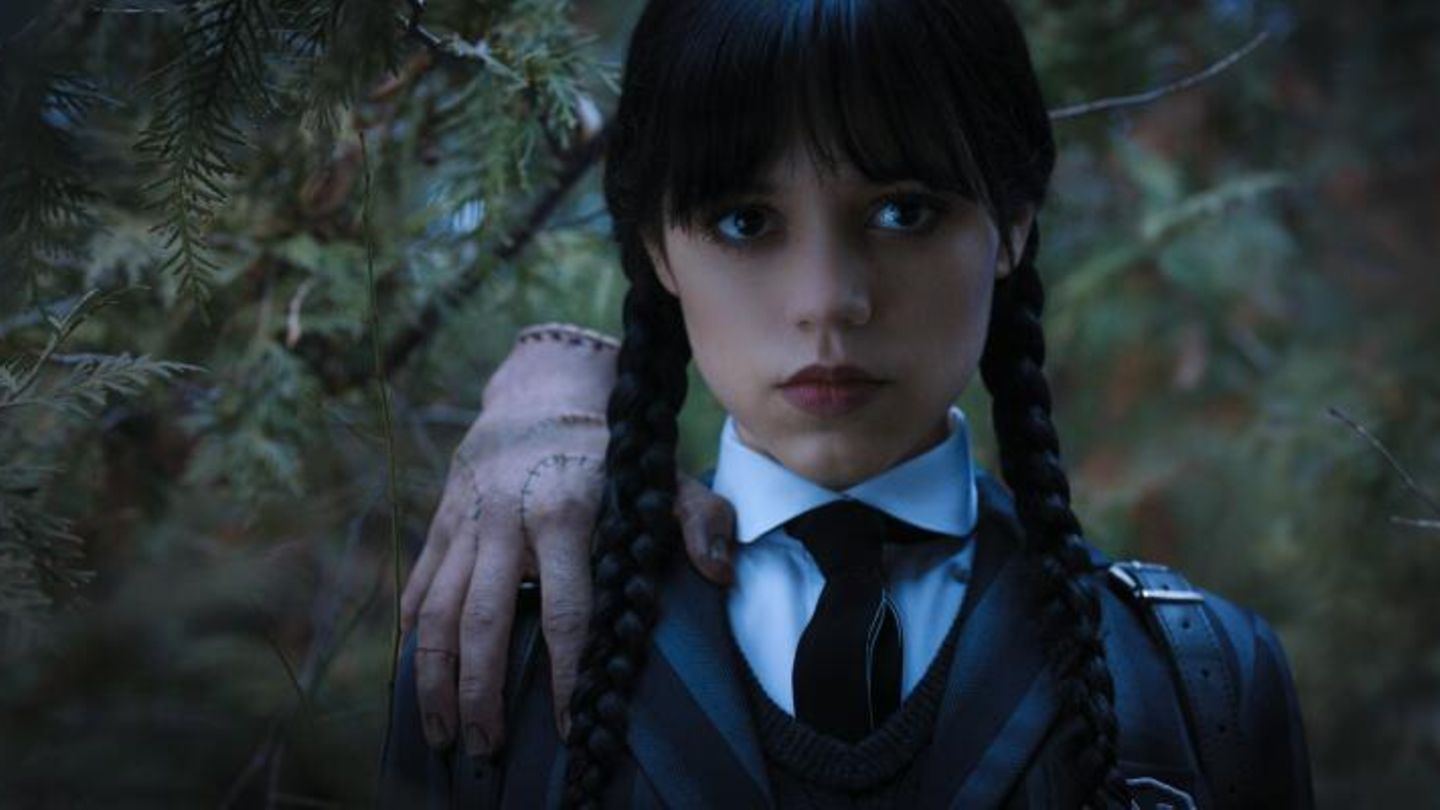
So when two separate people recommended Wednesday, Netflix’ Addams Family reboots featuring a 16 year-old Wednesday Addams in a supernatural high school, I was very weary.
Trailer!
But as it turns out, Wednesday is quite nice and definitely the best Burton thing I’ve seen the last decade! The dialogue is terrible, but that’s the point; the show’s supernatural aspect feels very cheap, but sort of by design; and the plot is entertaining young adult pulp in the best possible way – until Burton obviously loses every bit of restraint in the final episode and just tanks the whole damn thing.
You know, it seems about half of new Netflix shows are revivals of old ones. Most of these shows are just not good – because they just want an excuse to re-feature old characters and actors and settings and whatnot. They fail because they don’t have an original idea. Wednesday is, at its core, one of these revival shows. It features well-known characters, cracks inside jokes for the fans, waits until the final bout of episodes to reveal the last known character, and it even has the fans’ OG Wednesday, Christina Ricci. But it’s also completely new: The setting, genre, side characters – we haven’t seen the Addams Family like this.
Damn. What a year for gaming. And it’d be impossible to crown a game of the year if Elden Ring hadn’t come out. So without further ado, here’s some tips from me, a gaming expert, to you, an internet rando.
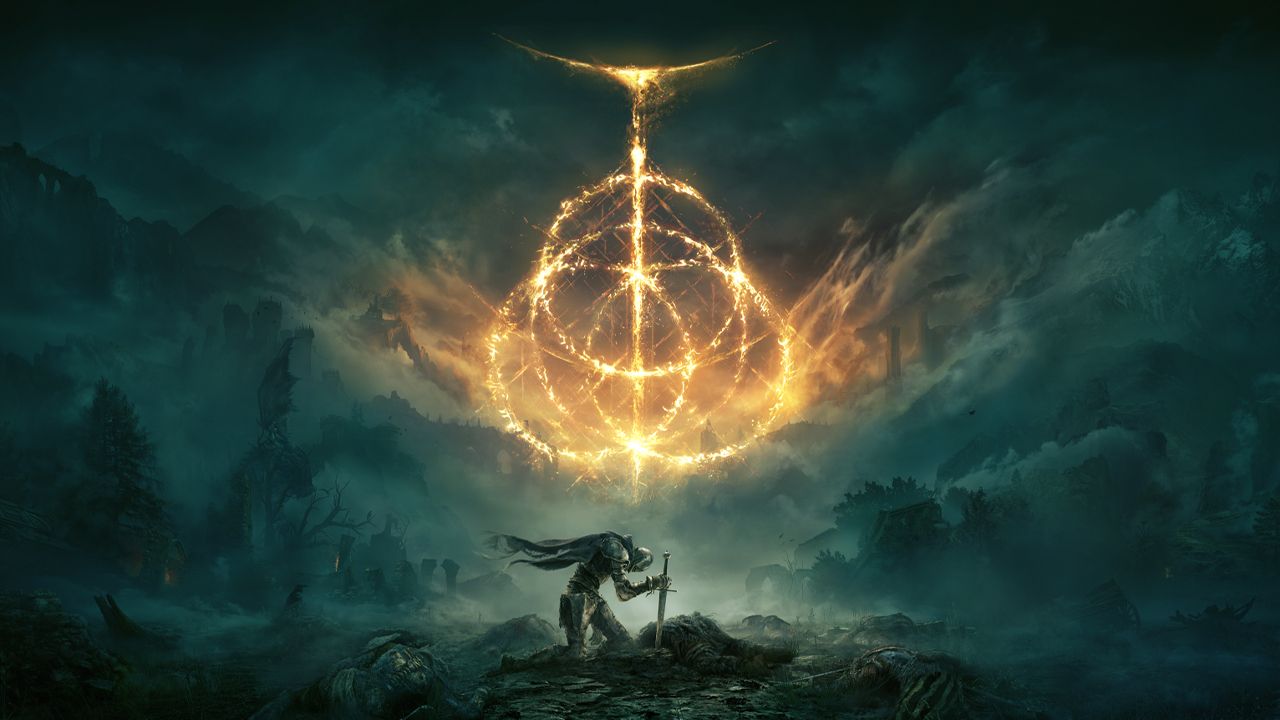
Wanna play, without hyperbole, a true masterpiece? Elden Ring
Had you asked me a year ago, Elden Ring was not on my radar. But this roleplaying game from the people behind the excruciatingly difficult Dark Souls series is really a masterclass in game design. It’s boasting a complete open world that just works by the way it’s laid out. There’s little to no hand-holding, no endless poorly written dialogue – you just boot the game and get going. It’s the best game since Breath of the Wild back in 2017 and it might even be better than that.
The defining moment for me: about 10 hours in, I’m starting to get my bearings, but everything in this huge, huge, huuuuuge world is super dangerous. Like these two huge bears in this weird misty forest, for instance. I sneak past them, and suddenly find a little unassuming temple a bit behind them. I go inside the temple, find an elevator, and activate it. We go down… and down… and down… for what feels like 3 minutes straight. Then, suddenly, the tunnel through which I was descending opens up and I and up in am underground forest that’s so huge the stones on the fucking ceiling feel like a starry night sky. That’s when I realized: there was a fucking second world underneath the first one.
I’m never finishing this game. But every month, I return to it, and lose myself for five more hours. It’s amazing.
Wanna play the first decent 3D Sonic game in two decades? Sonic Frontiers!
Man, Sonic’s had a rough go. It was so bad that the best Sonic the Hedgehog game in the last ten years was Sonic Mania – and that was made by a sega-hired team of romhackers. So cue my surprise that Sonic Frontiers, Sonic’s latest 3D game, is quite good! It’s set in an open world filled with springs and rails and while it makes no sense, it’s fun to run around in. Also, the battles are bonkers:
I’m fully convinced this game just became good by accident, because honestly, nothing in it feels tuned, tested or thought-out at all, but this game feels like a Whopper when I’m hung-over: terrible, but lovely at the same time.
The game for everyone – and yes that includes you, non-gaming cool person and/or grandparent: Curse of the Golden Idol
I’m a bit torn on puzzle games: the ones I love, I friggin love, but those are few and far between. So I’m quite happy to like Curse of the Golden Idol quite a bit. The premise is best explained with an example: You get a painting of one dude pushing another dude off a cliff. Certain things are clickable and give you more information (the contents of the victim’s pockets show he’s carrying a syringe, for instance). Then the game asks a couple of questions and you have to answer them. Who killed who? And why?
The game is rather short, with 11 of these paintings that get more complex as they go along. And the kicker: the paintings build on on each other, telling you a story featuring mysterious statues, cults and spontaneous combustion. It’s an amazing game and you, yes you, should play it.
Wanna mix anchovies with nutella and actually LOVE IT? Marvel’s Midnight Suns
Some genres should not be mixed, but the person who figured a Persona-Style “friendship simulator” in which you befriend 11 marvel characters (Wolverine! Iron Man! Niko… Nomura…?) would mix well with a card-based tactics battler is a genius.
By all accounts, this game should not work. But that’s what they said about the Avengers movie back before it came out. Marvel’s Midnight Suns is amazing, and while it is not the best game of 2022, it is MY best game. No game has had more staying power this year, I’ve been eating pop-corn with Captain Marvel and then using her to punch Hydra bad guys for almost a month now and I feel like I could keep playing this for many months more.
(Full disclosure, this might come off as if this game being good was a complete coincidence, but it was made by Firaxis, the people behind Xcom 2, a game I have poured 300+ hours in over the years honestly the game I would take with me to an abandoned island. So yeah, I knew I would fall for this one HARD).
Wanna mindfuck your toddlers? Play Kirby: The Forgotten Land
2022 was also the year in which my kids began to participate in the hobby that’s actively destroying my back. We played basically all the Mario games, but none of those made their little brains explode like Kirby did.
So Kirby starts out innocently enough: a pink little puffball has a platformer adventure. A second player can play as what my kids affectionately called Banana Waddle Dee, a Waddle Dee with a Bandana, and not a banana, but whatever. And then this happens:
Yep. It’s body horror for toddlers. As soon as this scene played, my kids were hooked. They wanted to defeat the big bad Leon – an evil lion. We fought for weeks and then, we finally defeated him. Only – GASP! – he wasn’t the bad guy at all, he was being controlled by an evil alien!
So yeah, a lot of narrative firsts for my kids in this one. First piece of genre media? Check. First bait and switch? Check. First close encounters? Check!
This is the game that made me enjoy playing with my children instead of just next to them. It was great, and even months later, they still ask me about Leon.
Wanna feel smart? Play Signalis, Disco Elysium or Immortality
These games will totally make you the life of the party – but only if the party is specifically:
A third-semester lit student party: Disco Elysium. This very, very verbose role playing game is a literature student’s wet dream. You can roleplay anything, from a decent cop to a rapey communist. On my playthrough, I was suddenly known as “regular cop”, which kind of says a lot about me. The story – essentially a murder mystery in a world that feels semi-based on clockwork orange – is a written work of art and one of the best things I’ll probably read in my life. Also, it was way too smart for me (and itself).
A first-semester film school party: Immortality. This game has you essentially scrubbing hours of footage from three movies to find out what happened to its main actress. The movies are from the 60s, 70s and 90s and are recreated perfectly, which is no small feat considering this game was made by a game studio. The illusion of analysing found footage works perfectly, and when the supernational elements started trickling through, I got chills so bad I had to turn off my PC. (You can play this on your tablet/phone/whatever if you have an active Netflix subscription, so there’s no reason for not trying this out)
A 2002 LAN party: Signalis. This retro horror game tells a story that feels like a mixture of Neon Genesis Evangelion and the first Metal Gear Solid. Like Elden Ring, it knows that less is more, and doesn’t beat you around the head with endless explanations or walls of text. Let’s be honest: The sparsity of prompts like “Jump into the meat grinder? YES / NO” are what really makes them work.
Do you play way too many games, but do you also want to play many, many more? Get a SteamDeck!
2022 was the year of the Steamdeck, essentially a portable Linux handheld built for gaming. I preordered one in 2021 because I had a feeling I would like it (and I have a thing for handhelds), but this ended up changing my life. All the games on this list, I played on this device. I invested in a Dock that connects it to my TV. I even dabbled in Linux to get the most out of it. It’s not a cheap device, but it’s been the best bang for my buck in years.
Honourable mentions
Do you like unfinished games that still draw you in? Try Pokémon scarlet of violet, the buggiest pieces of shit I can’t help but love.
Do you yearn for your days in college? Try Two Point Campus, a university simulation game in which you train cooks, clowns, spies and wizards. Because why not.
Do you like to feel like an idiot? Play Starcraft 2 competitively and feel bad when you squander your entire army to another fucking marine push.
Do you wanna finally play the game the kids are playing, but are you scared that the kids are too good? Play Fortnite Zero Build – the most popular game in the world, minus the building. You know, the part the old geezers (like myself) are bad at.
Man, 2022 was an amazing year for games. I probably forgot at least five I completely devoured the last year.
2022 is the year in which my kids got older and the pandemic died down and I finally started watching TV again. Yay! So without further ado, here’s some randomly assorted TV stuff I loved this year.
First off: SO MANY INTROS!
2022 was the year of the amazing TV intro. Here’s a few:
I think Severance has the best intro. I’m not done writing about this show yet!
Season 2’s intro is amazing, and so dense, an art student could write an essay about it.
Technically not this year, but whatever, this song slaps.
Better Call Saul’s Ending
Remember when Breaking Bad ended 2 episodes before it actually did? Better Call Saul fixed this by reaching its climax about 5 episodes before ending and then creating an incredibly powerful epilogue that is basically the essence of the show.
And it gave us this incredible scene:
https://www.youtube.com/watch?v=fm0tKZs-XCk
Severance. Like, all of it.
Severance was probably my favourite show of the year. It was at the same time hilarious, dark, absurd and incredibly touching. If you watch anything released this year, this show about people who surgically separate their work selves from their private selves should be it.
Yellowjackets for being a better LOST
Yellowjackets is a show about people stuck in the wilderness after a plane crash juxtaposed with their lives many, many years later. Sounds like a certain show I love? That’s because it is. Only it’s better, because it has teenage drama mixed with cannibalism and it doesn’t just try to be like Stephen King, it is.
https://www.youtube.com/watch?v=A5xkrmem8P4&t=9s
White Lotus
I got a bit late to the White Lotus party, but that meant I could binge-watch the first season and start season 2 in one go. And boy, did I binge-watch the first season and start season 2 in one go! The White Lotus revolves around wealthy families visiting fancy resorts and the cringe-worthy problems that ensue. These include but are not limited to getting the wrong room, drugs-so-many-drugs and pooping in suitcases.
And it features a very unhinged Jennifer Coolidge:
I finally got around to watching Succession
Succession had been on my list for ages, but I just didn’t have the brain for prestige drama. But this show about the, um, succession of a huge media empire is amazing. I secretly think it’s where Veep’s dialogue writers went after that show ended, because boy, there’s some amazing dirty words being said by some amazing actors.
But at the core, it’s not about the jokes, or about Kieran Culkin’s hilarious performance – Succession is a very recognisable family drama. There’s three seasons out, I’m halfway through the second season but I’m savouring any moment. If you don’t care about spoilers (but you totally should), here’s a scene:
Guilty pleasure of the year: Stranger Things
Because of how cool it is to like Stranger Things, it’s not cool to like Stranger Things. Go figure. I had actually given up on this show, but as soon as I had finished the fourth season’s first episode, I knew the love was just sleeping. Season four pulls the team apart in multiple substories, one which I skipped because it suuucked (sorry, Hopper). And in hindsight, the other two stories weren’t so great, either. But god damn if this isn’t one of the best-produced shows in the world right now. Even if the actors and every word they say are the worst.
I mean look at that scene – probably the most iconic one of the entire season. It doesn’t make a lick of sense. Max hurts Vecna. She runs back to the gate, giving the impression of being chased. But she’s not chased, Vecna just stands there. And stands there. And she looks back. So she knows!
But god damn if tears weren’t running down my fucking cheeks watching this INCREDIBLE episode.
Show I am most conflicted about: The Boys
The Boys – the show about superheroes that depict them the way they are (fascist) – is pretty much what reinvigorated my passion for television. It’s tense, funny, dark – and a perfect counter to my current Marvel fatigue. And with Stormfront, it has one of the most daring characters I’ve seen all year. Spoilers below:
But by the time I got halfway through season three, I started feeling Boys fatigue, too. Maybe I shouldn’t have binged it. Maybe the whole Soldier Boy plotline didn’t resonate with me. I think the fourth season will tell.
For shame award: benching This is Us
So I (finally) watched the first episode of “This is Us”, a family drama. It was the perfect pilot. It was so perfect, that I quit watching. Oops. I’ll probably get around to this show in 2023, but there’s just so. Many. Episodes…
Rediscovered from my childhood: Battlebots
When I was a teen and the weather was good, our TV could receive ITV. And ITV had “Battlebots”, a show in which home-made robots duke it out for fame and glory.
Well, it’s on Netflix now. And I watched a whooooooole lot of it.
Best stuff to watch while cooking: Starcraft 2
2022 was also the year in which I watched a whole lot of Starcraft 2 while cooking, cleaning or whatever menial task comes to mind.
My love for the best game I suck at was reinvigorated in 2022. Maybe in 2023, I’ll finally become good at it?!
Anyway, this was my 2023. There’s some honorable mentions, like finally getting around to watching “Kidding” and finding it “just fine”. Or catching up on Rick and Morty and seeing a rollercoaster in quality. Or half a season of the crown, which is turning into “Breaking Bad with Royals”.
It’s an odd thing, finishing a TV show. As someone who’s been writing for the same series for about six years now – granted, we’re not high concept drama but a long-running medical – I can’t imagine how hard it must be to write something that not only pleases yourself, but all the people involved in making the show – and in the end, the crowd. There’s so much riding on those final minutes! I mean, people still talk about the final scene of the sopranos (don’t stop! believing!) or LOST (we’ve been waiting for you). This is your last chance to reveal your hand. If you’re too obvious, people will think you’re an idiot. If you’re too open, they will think you didn’t know what story you were telling – and then think you’re an idiot.
When Breaking Bad ended, I wasn’t worried. The third to last episode, Ozymandias, was an incredible piece of television, a riveting hour in which Walter White’s entire house of cards came crashing down and almost ever promise the show made in its five previous seasons was fulfilled. For me, the show ended with that episode, and the two following episodes were an epilogue in which they would tie up Walter White’s and Jesse Pinkman’s relationship about a year after Ozymandias.
Now, with Better Call Saul, we have a similar story construct: throughout the show’s six seasons, there’s black in white scenes which function as a flashforward teasing Saul’s life after the events of Breaking Bad. The show itself, however, takes place before Walter White ever happened. For about five seasons, the black and white scenes are nothing more than fluff. Very little happens, and while watching Saul’s relationship with his brother, with Kim, with Lalo, you kind of forget about it.
As the series progressed, I grew increasingly worried. The further we went along, the more the show – which started as a courtroom drama – revolved around the doings of Gus Fring and Lalo Salamanca, two drug baron rivals who had very little to do with our main character. And when a showdown between Lalo and Saul finally happened five episodes before the series would end, I was scared of the consequences. Was this the endgame of this show? A showdown between Saul and a dude selling meth?
Turns out, I shouldn’t have worried. An episode later, the Lalo storyline ended. A new conflict – one which had been subtly brewing under the surface for six seasons – was established. And this conflict pushed the story into the future realm of black and white.
Breaking Bad’s and Better Call Saul’s cinematography is amazing. I could watch scenes from these shows all day just to admire how they were shot. They are often daring and linger on things a smidge longer than anyone would dare, and this is especially true of the final episode, which – with a few exceptions – are entirely in black and white.
It’s consistent storytelling, and it’s such a rare thing. Anyone in. the industry in their right mind would say that after one episode, the show had to switch back to its vibrant colour palette. But it never did. They had a concept and they stuck by it.
And it pays off: Better Call Saul absolutely nails the ending. The final five episodes are the best the show has made. And the finale not only finishes the series, but give an organic extra layer to Breaking Bad’s ending without retconning what arguably was and is the best show ever produced on television (fight me).
There’s so much more to say about Better Call Saul (and Breaking Bad), and I think I deserve a spanking for not writing at least three more pages about Kim Wexler, one of the most interesting characters on the show, portrayed by Rhea Seehorn. So I’ll just leave this here:
https://www.youtube.com/watch?v=fm0tKZs-XCk
See that performance? See how they frame that? See that hand? What madman who do this? And why aren’t we all doing it?!
So I just finished the final episode of Better Call Saul. What an ending. I’m blown away – as I expected. The entire series may not have been quite as good as breaking bad, but it was the best thing I watched on television nonetheless.
It’s weird that this show is over. I’ve spent 13 years in New Mexico, following two stories about people reinventing themselves and finding out who they are. Oh, and about drugs and money. And now it’s just gone. No more unexpected plot twists. No more incredible montages. No more wonderful, drawn-out cinematography and storytelling that takes its time.
Like any selfrespecting author, there are plenty of things I absolutely hate about myself. But nothing is more annoying than my inability to deal with the horror genre. Yes, I’m a scaredy-cat – and never has this been more annoying than during my time with the PS4 horror game “Until Dawn”.
Because god damn, that game is good.
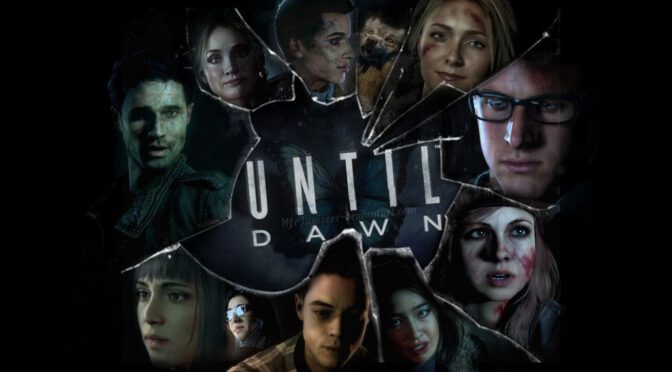
The premise is deviously simple: Until Dawn is a choose-your-own-adventure-style horror game, an interactive movie in which you alternate between eight teenage cliches as they try to survive a particularly gruesome night. So far, there’s been ghosts, werewolves, clowns, and – because the game keeps asking what I find scariest of all – a whole lot of scarecrows. God damn I hate scarecrows.
So how does this work? It’s quite easy: you play “scenes” from what is essentially an eight hour horror epic and sometimes, the game will ask you to make mistakes. Do you want Ashley to crush Chris superhard or do you want to give him the cold shoulder? Do you want to shoot a squirrel for fun? Watch out, that squirrel might just give you a bloody wound which a particularly scary clown murderer can smell five hours later.
You win the game if, at dawn, all characters survive. But it’s also impossible to know what will kill them or not. And that’s where the fun is: Wondering what the repercussions of your micro-decisions will be. The characters are all perfectly tailor-made to kind of *want* to kill them, but they’re also kind of endearing in their own right – because their dialogues are incredibly witty. It makes role-playing as “the cool jock with abandonment issues” all the more fun – and it’s amazing to see him hung from a meat hook later on.
RIP Matt, we hardly knew ye.
So yeah, I love this game. But I play it five minutes at a time with cozy music in the background. And if one more ghost suddenly jumps on the screen, I will lose my shit and hurly my controller at the TV.
I can’t wait for the sunrise to come and release me. Fuck this game. Fuck this amazing game.
I have a confession to make: I’m one of those people who got *really* into board games during the pandemic. Like, spend way too much cash on games like Root and Scythe, supercomplicated games you ideally have to have four players to play, which is ironic, because there’s only two people who can read in my household and we weren’t supposed to have people over.
Suddenly, our house was littered with cardboard boxes containing meeples and coins and dices and oh my god these games are absolutely terrible to set up, aren’t they?!
Thank God we had a second lockdown. One in which I decided that maybe I should get into woodworking. Because as it turns out: these two hobbies are pretty compatible!
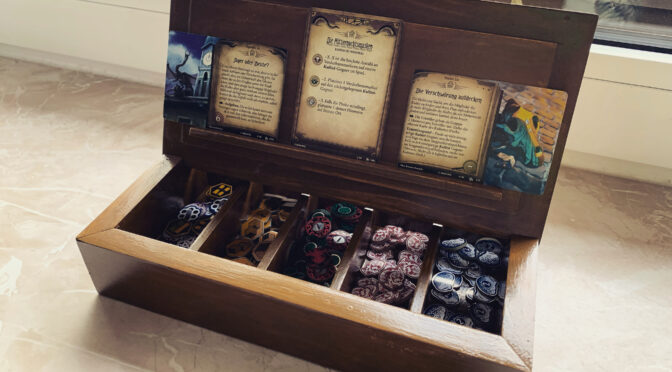
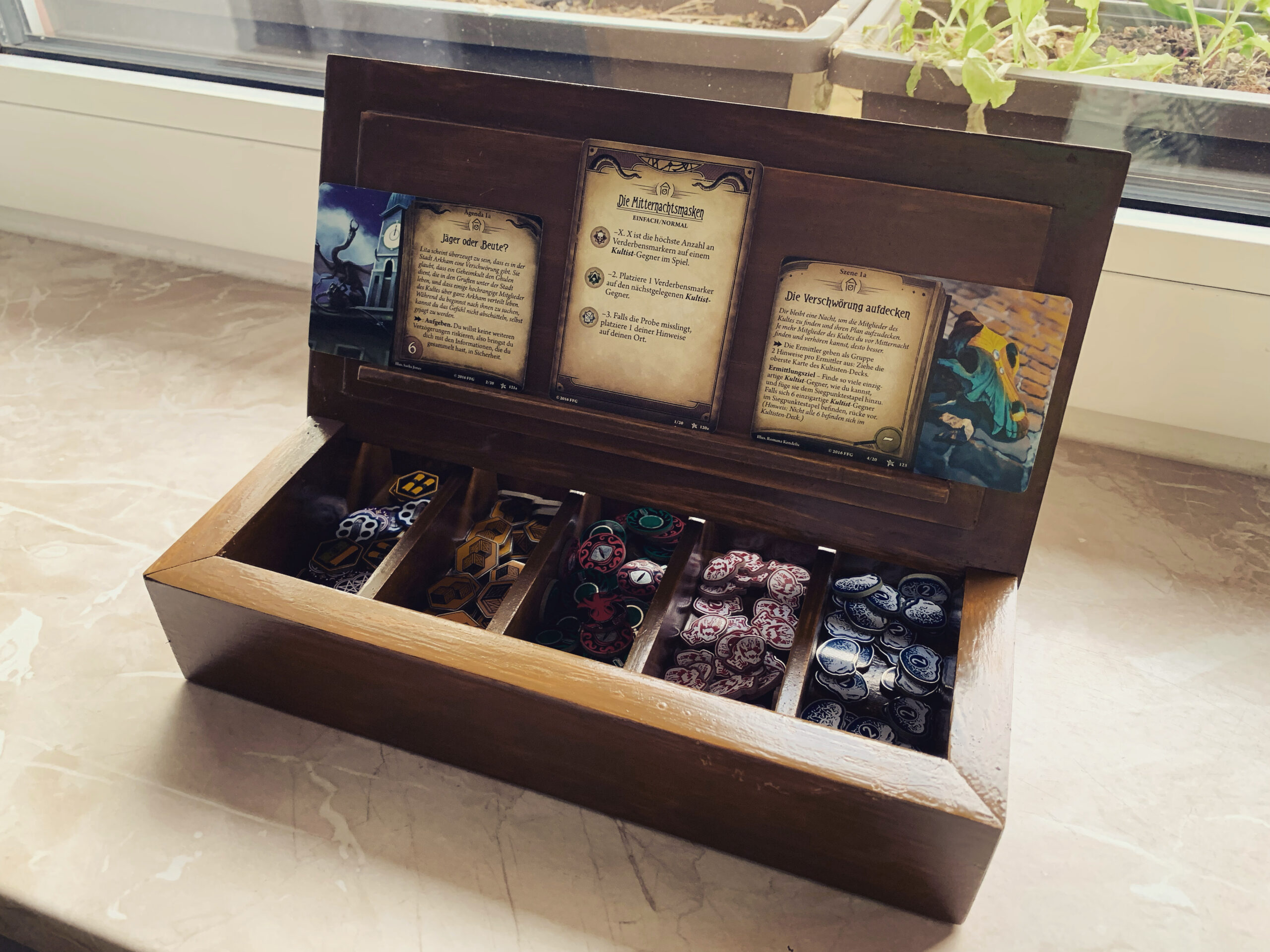
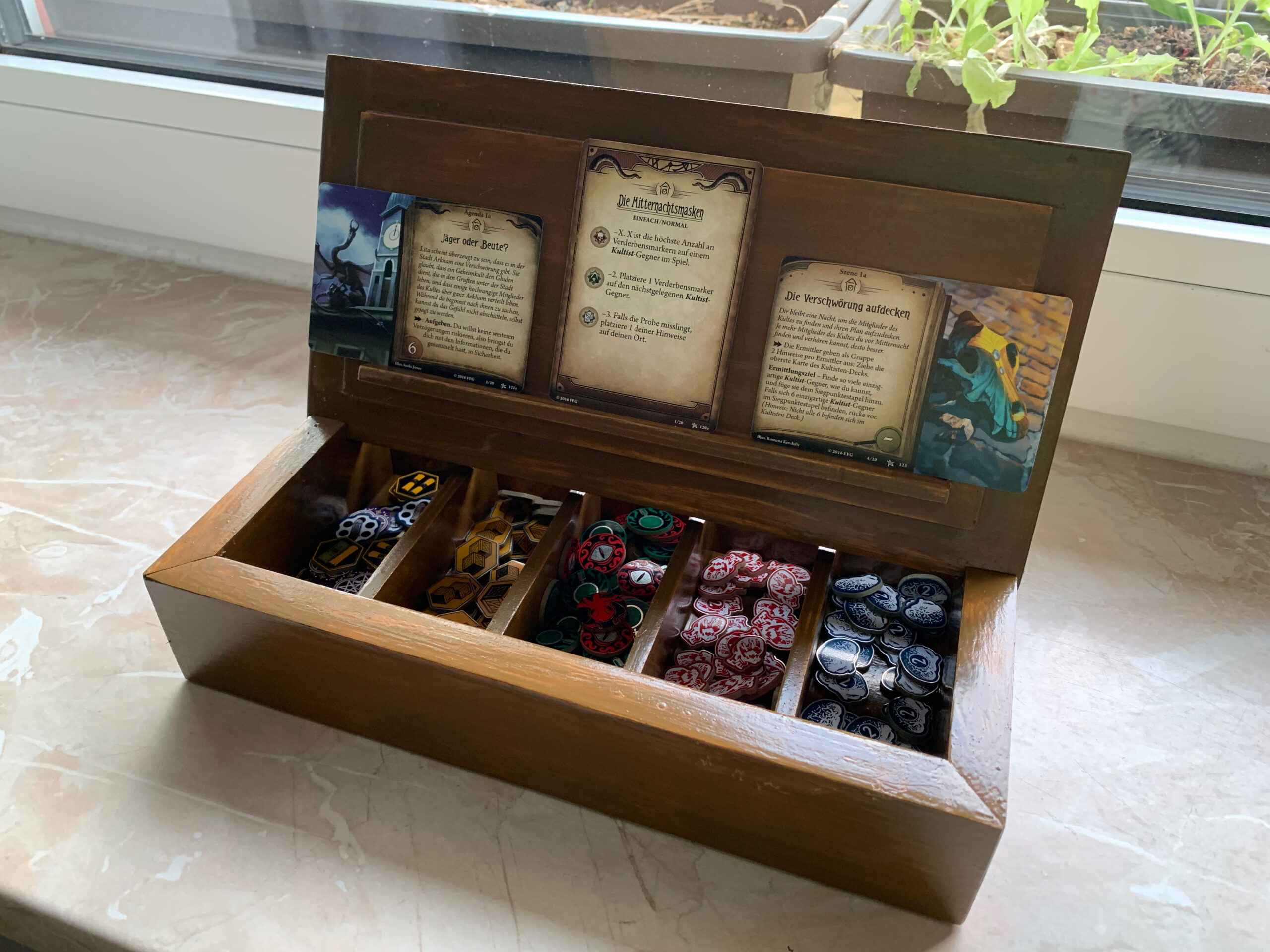
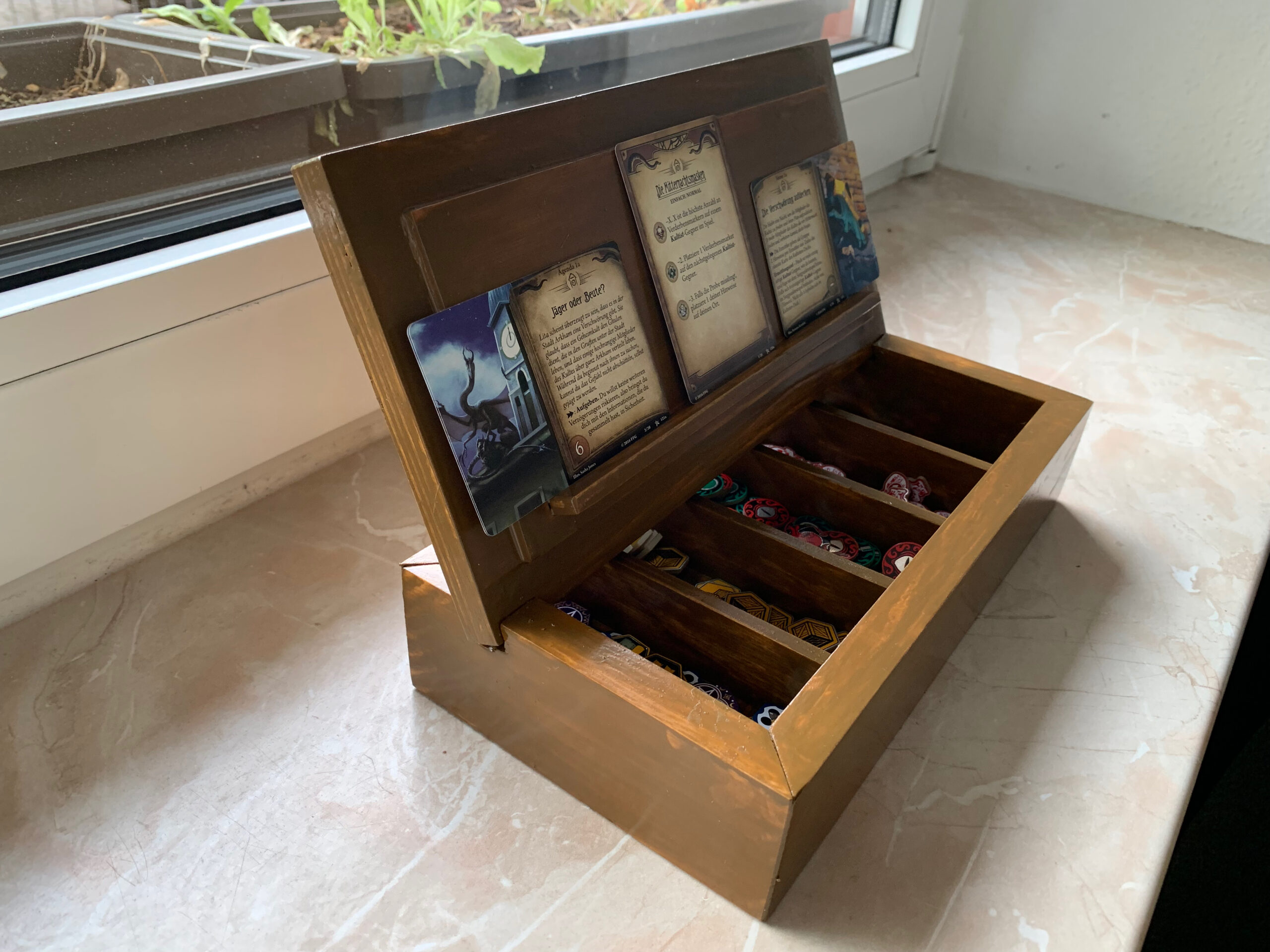
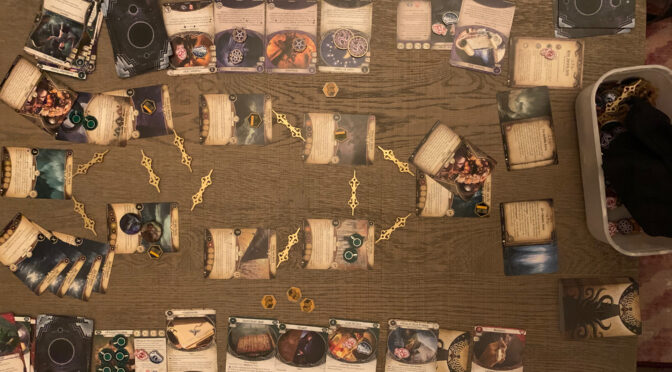
So it was obvious that one of my first projects was going to be something to clean up the table on our weekly Arkham Horror nights. Arkham is one of those games I pimped up the wazoo with custom-made tokens, arrow markers, session cards, etc. And I made it my mission to have them neatly stored on the side of the table so they don’t interfere with the game – and look cool doing so.
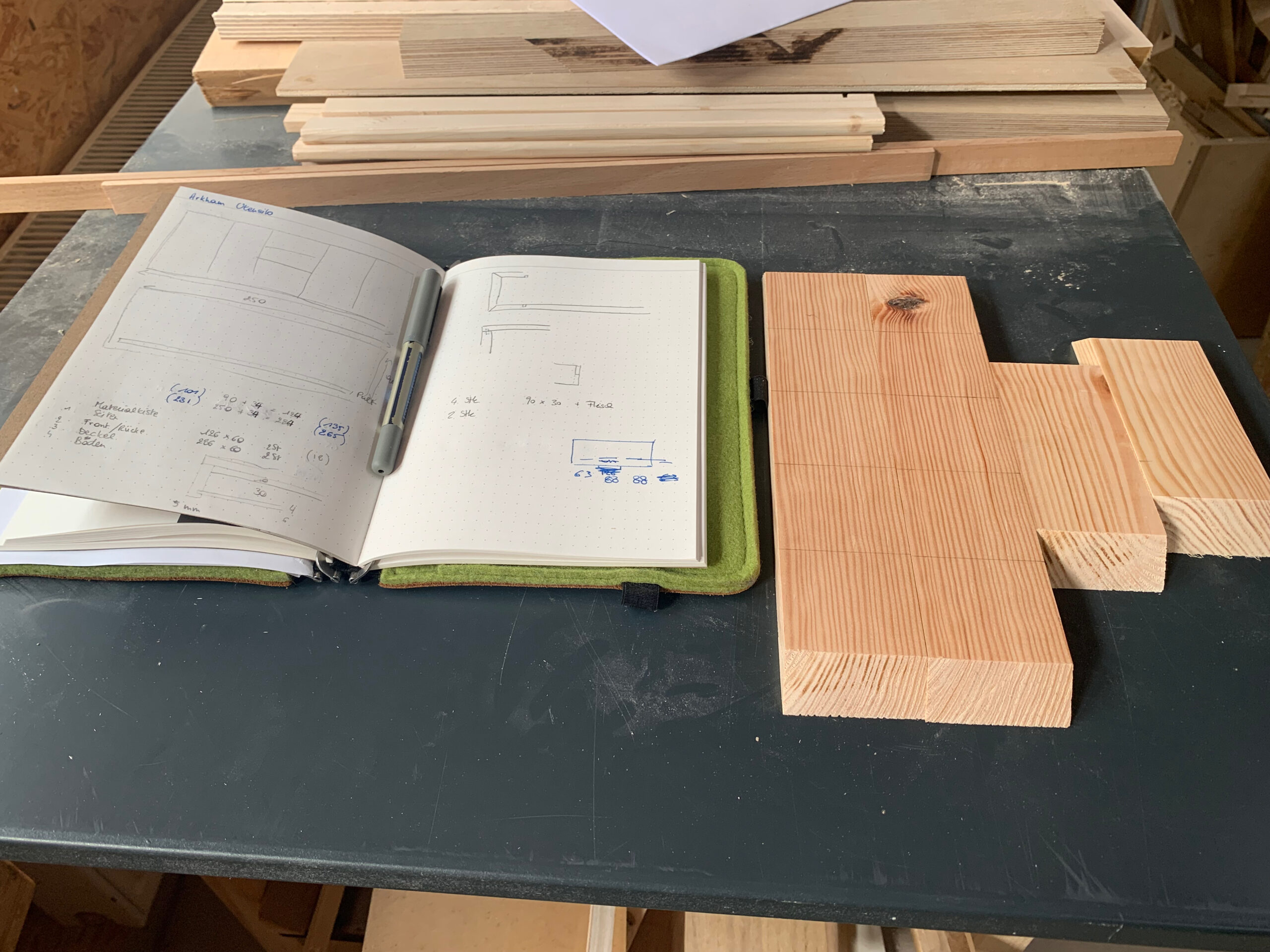
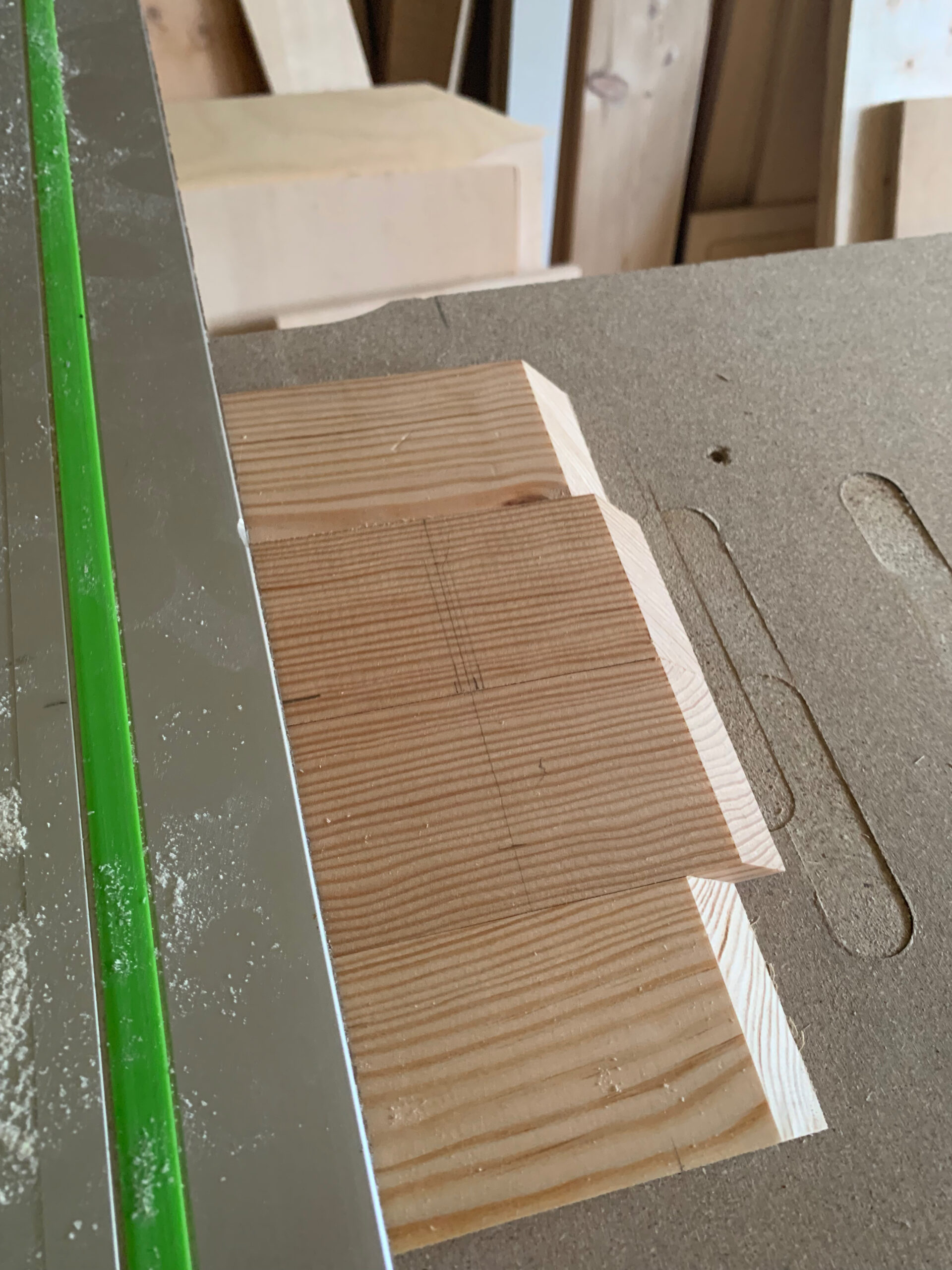
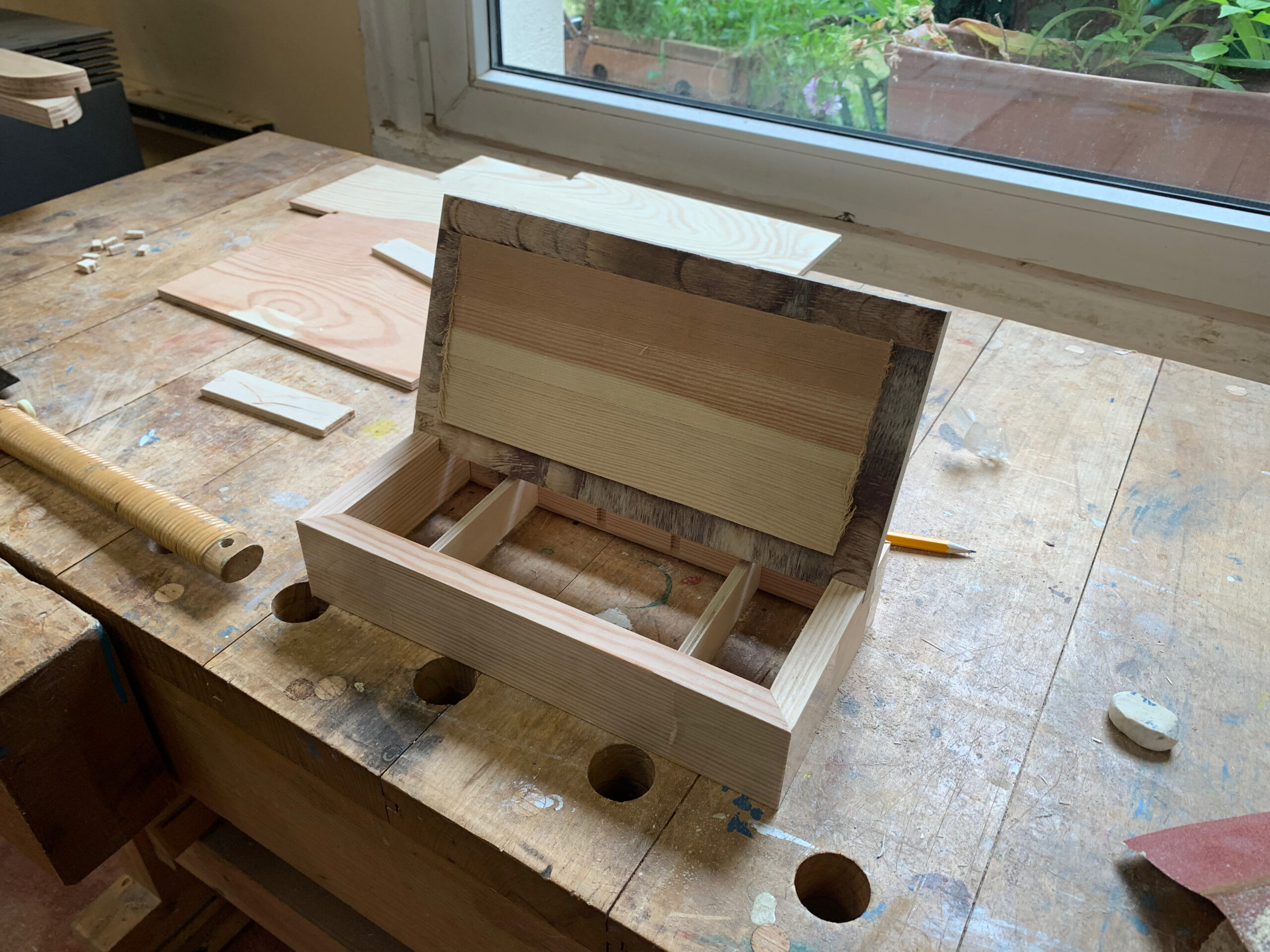
This is how it started – with a few scraps of wood
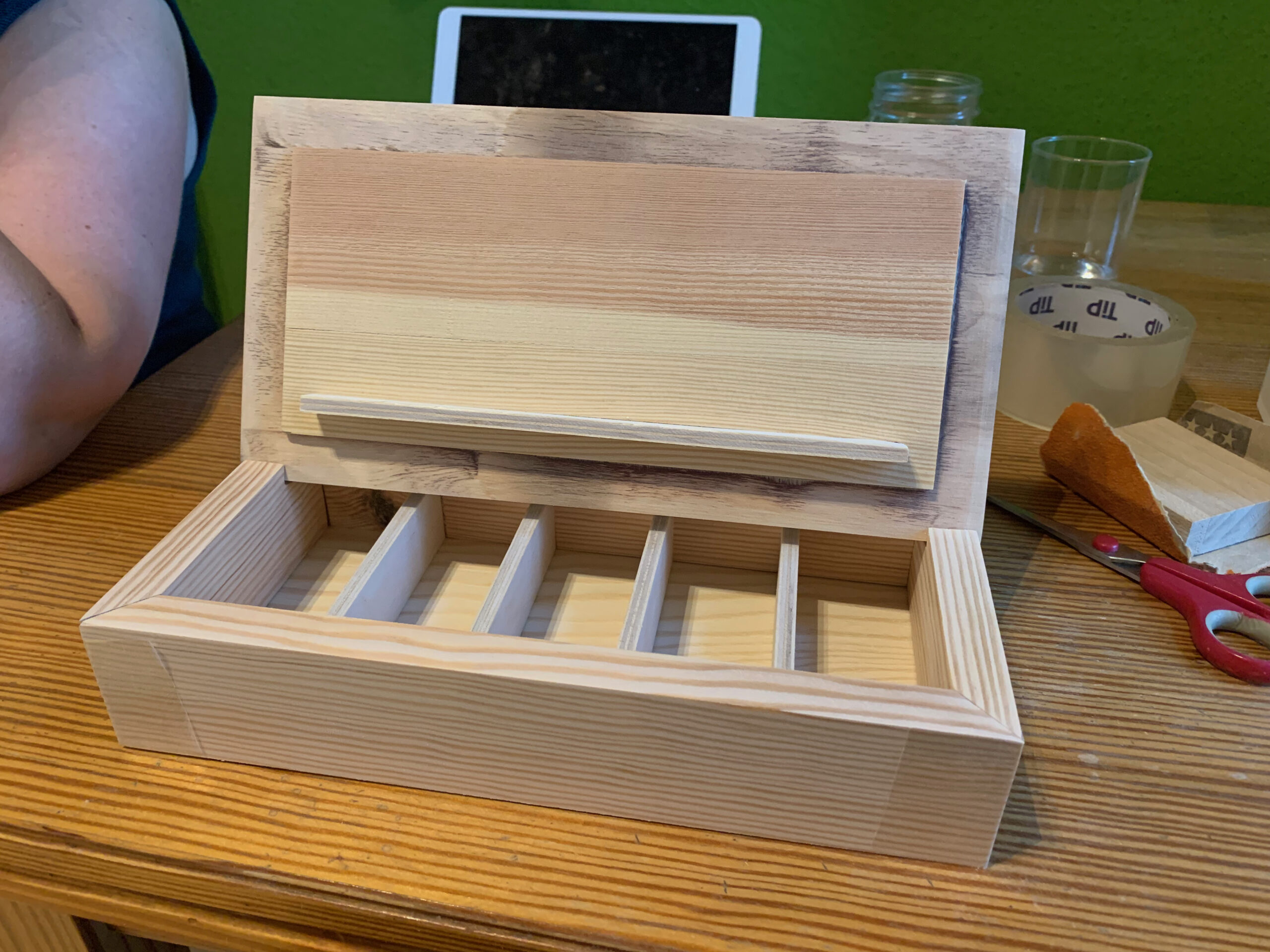
It had to hold eight kinds of tokens, and three sets of cards, two of these horizontally (the so-called act and agenda decks, which advance the game) and one vertically (the scenario overview, which tells you what the game’s symbols – essentially its dice rolls – mean in this scenario). The cards have to be visible at all times, the tokens have to be easily reachable so you don’t have to look for the right one. As an added bonus, I wanted to include the “mythos deck” in this utensil – the deck you pull a card from at the start of every turn, but I quickly dropped it because there was no way to do it elegantly.
In essence, I made a box with five compartments. Originally, I wanted to divide one of these compartments into three more, and prepared all the pieces too – but that didn’t work because of how I did the lid. I gotta say: I love the lid. It doubles as a lectern that holds the cards and makes this box look hella unique.
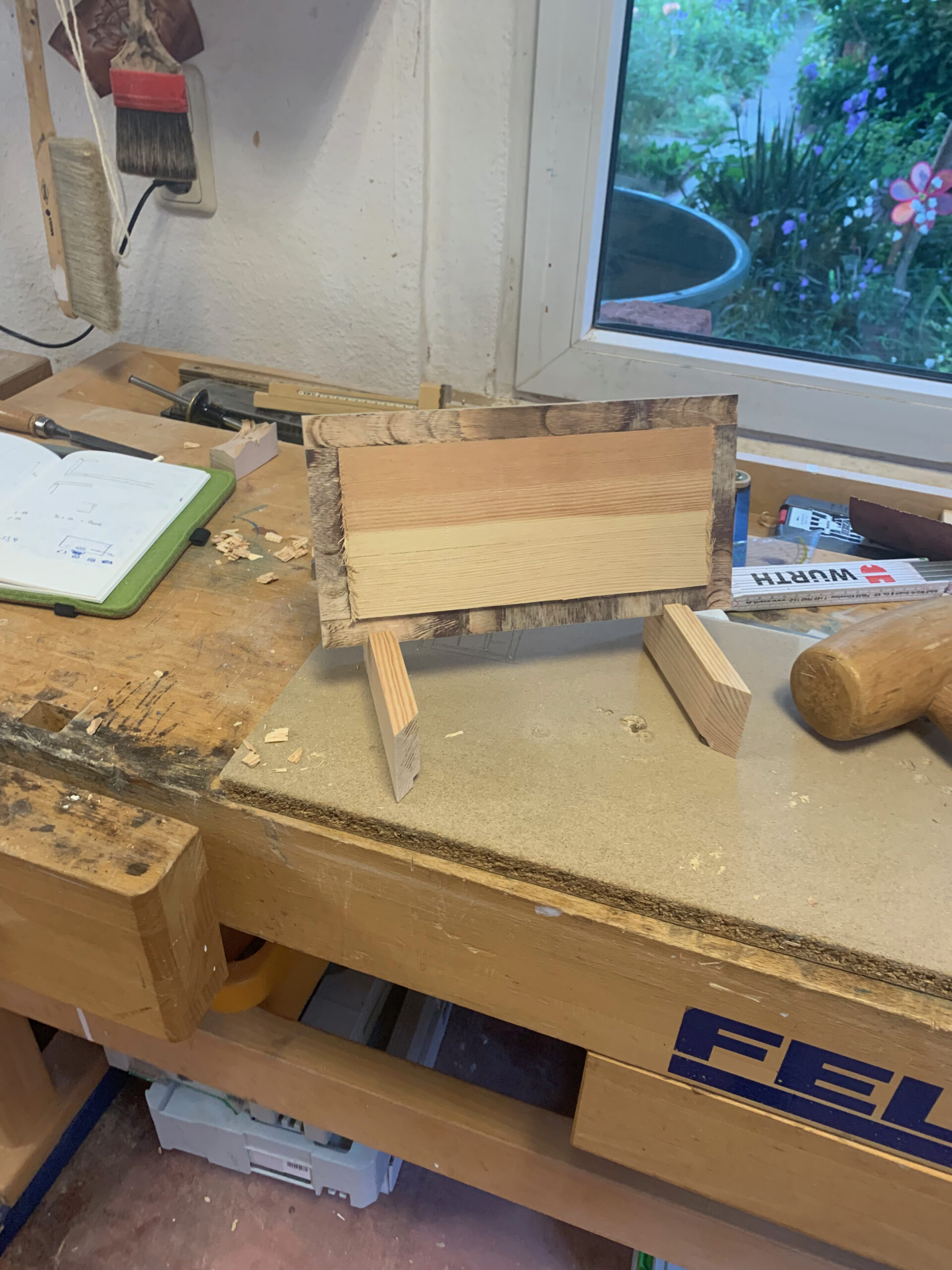
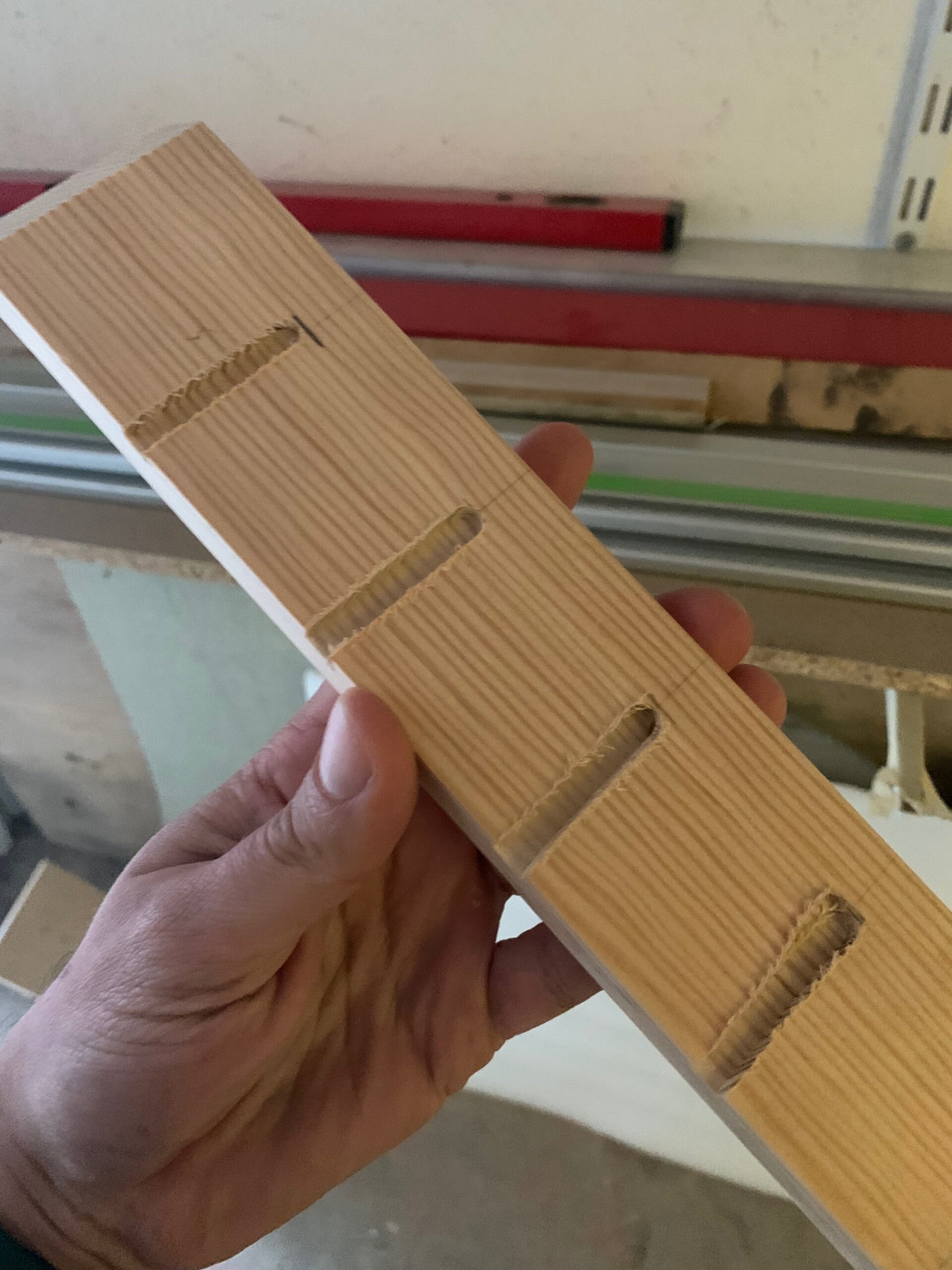
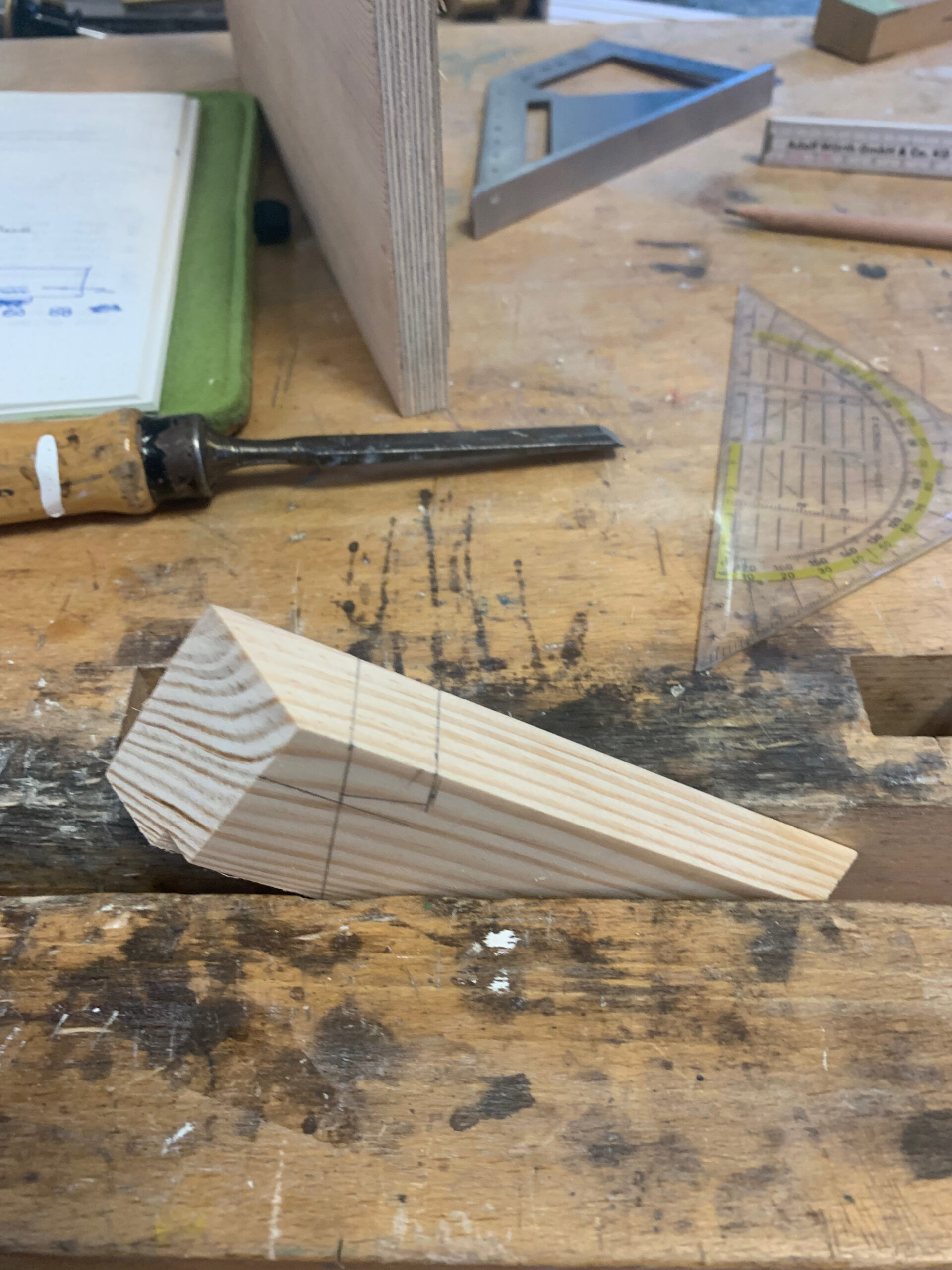
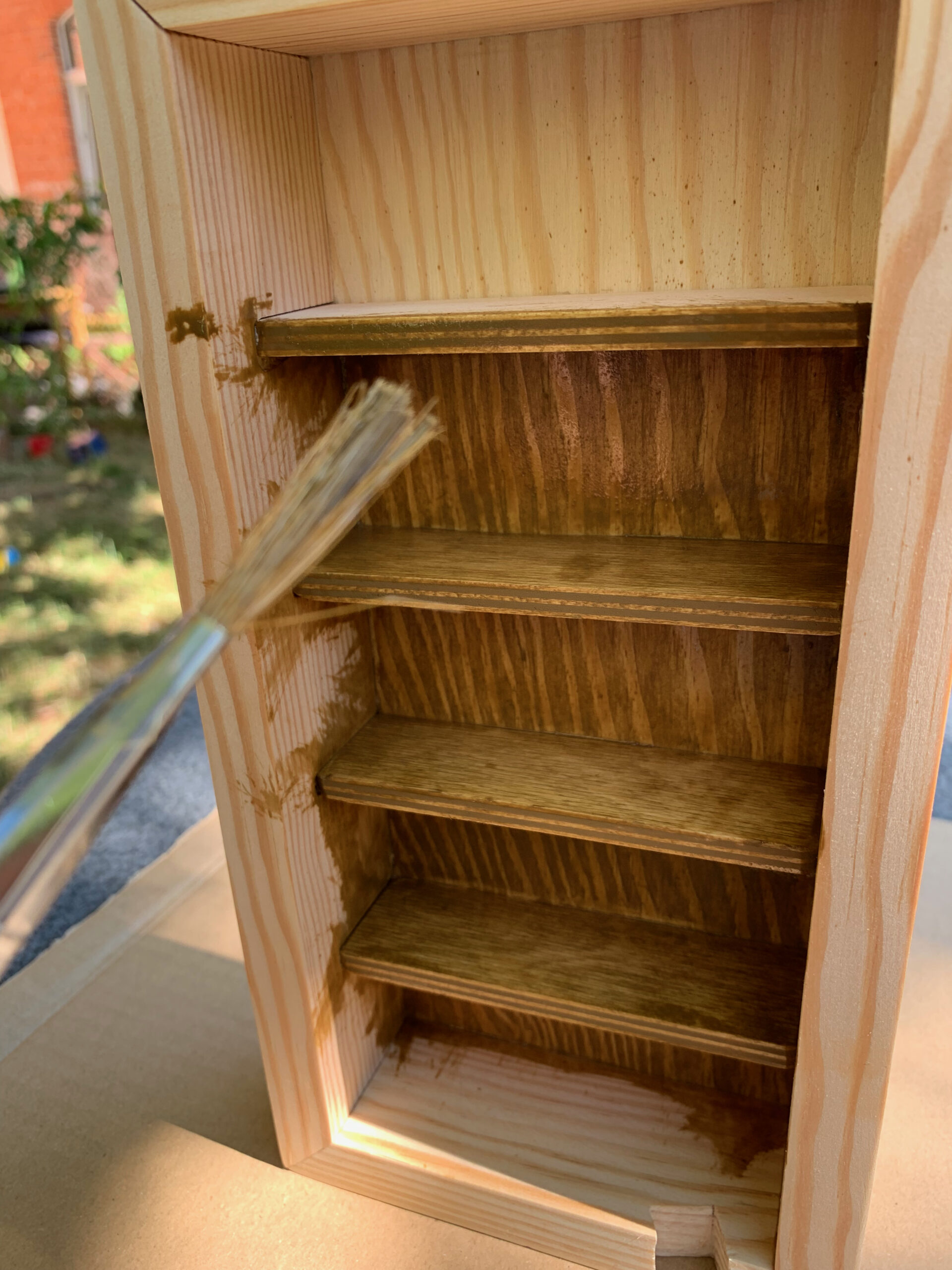
So I made some measurements and took them to class (I made this utensil in a workshop). There, the teacher handed me some leftover wood and essentially threw all the measurements out of the window. The rest was really quite unspectacular: we cut the wood to size, partially by table saw, partially by hand. Then I routed out the compartments and the lid, chiseled the sides to fit said lid, and grinded for what felt like ages before gluing everything together.
After what felt like hours of careful chiseling, the lid fit.
In the end, I slathered wax on it, which I will never do again because it was a smelly mess and it kind of cheapens the whole deal. But hey, at least I learned something.
It’s not perfect by any means – I made some chiseling mistakes and the routing was off by a millimeter, creating a crooked look for the compartments if you look at it from above, but god damn it’s my first project and there’s nothing in this world that looks like this and I love it like a widdle baby.
I’ve been replaying a lot of Final Fantasies lately. It started with 12 (the zodiac age!), a japanese star wars; then I switched to 7 (the remake!), the edgiest of the bunch barring 8, and then I landed on nine. And man, I love Final Fantasy IX.
When it came out in 2000 (a few years before I had a PlayStation and could actually play the damn thing at full-speed and not emulated on a PC without a dedicated GPU), Final Fantasy IX was supposed to be a victory lap of what was arguably one of the most successful video game series of the 90s. It had all the tropes and then some. And man, teenage me looooved me some tropes.
Now that I’m older, I enjoy Final Fantasy IX differently. I enjoy its incredibly rich world. Its amazing characters, who, like no other Final Fantasy, can carry both the comedy and the tragedy embedded in the wonderful script. And man, that music… it’s something else.
Unfortunately, it looks like a playstation game. Because it is. It’s got the crude models, the blocky backgrounds, that weird floaty polygon effect that happened because 3D graphics were just out of the Playstation’s reach. And because I always played it on a Playstation console (or a vita), I could do squat about it.
But now, for the first time in ages, I have a PC. And I can mod it.
Enter the Moguri Mod, a modification bigger than the game itself that, with a few clicks, transforms the game in widescreen and wonderful HD. Suddenly, those blocky backgrounds look the way they were intended, like wonderful paintings of beautiful locales; the music sounds amazing, and the character models… them polygons don’t float, man.
Just click the link and look at the trailer and tell me that ain’t the most precious thing ever!
Final Fantasy IX is my happy place. And now it’s a happy place that doesn’t look like shit.
PS Quina is the absolute best character ever and I won’t be convinced otherwise.
If the amount of posts in the last years haven’t been an indicator: I’ve been busy. Between an incredibly demanding but rewarding job, a family with children and a global fucking pandemic, there’s been way too little time for fun. Not because there is no time – worse: when the time is there, I have no energy for it.
And yet, over the last year, I’ve always been able to squeeze in a round of Arkham on Sunday nights.
For those wondering: Arkham Horror is a board game universe, set in the roaring twenties, that loosely draws on an indiana jonesized version of the infamous horror stories by H.P. Lovecraft. They usually involve archetypes (the mobster! the street urchin! the millionaire!) battling against cosmic beings that are very hard to spell. Arkham Horror has three boardgame versions (I’ll probably write something about the excellent third edition sometime) and the reason I’m writing this: a card game.
Now I’ve been burnt by card games. Summer of 2000, fifteen year-old me spent all his hard-earned money on Magic: The Gathering cards. So let’s just say I was a bit hesitant. But one argument swayed me: the cards in these packs are fixed. You know what you’re going to get.
And what you get is quite amazing. You get an interactive story in multiple parts, where the first session might have you start in a local town investigating a disappearance – and then eight sessions later you’re in outer space fighting witches and a cosmic fucking being. Things go delightfully off the rails, all the odds are stacked against you, but even if you lose, the story somehow goes on. It’s choose your own adventure meets deckbuilding and it’s delicious. And how’s the deckbuilding, you say? Well it’s quite the thing. One campaign, I took the millionaire – whose special power is, you guessed it, having a small fortune – and turned him into a philanthropist. Another campaigned, I played a boxer that could draw cards whenever he punched a monster – cards that of course lead to more punches being dealt.
It’s storytelling times three through cardboard, and it’s completely my thing. Firstly, every Sunday evening, we experience a story simply by arranging cards on the table and reading some texts, like a form of D&D lite. Secondly, we choose characters and build them using cards that enhance their innate traits, as if we were equipping them in an RPG. And thirdly, we play those cards, battling hordes of enemies, in an order that causes stories to emerge out of nowhere. In one turn, I shoot at a monster and miss, but then I play a card and suddenly my bullet ricochets into the cultist next to him. It’s so much fun.
So yeah, Sunday nights are for battling ancient ones now. If anyone wants to join, grab your tommygun and join the fun!