Blog

  • 30 One-Sentence Stories From People Who Have Built Better Habits

    30 One-Sentence Stories From People Who Have Built Better Habits

    In this article, I’d like to share 30 “one-sentence stories” about building better habits. (They are not all exactly one sentence, but they are very short.)

    None of these stories are mine. They were sent to me by readers of Atomic Habits. My hope is that these examples will illustrate how real people are putting the book into practice. They will show you what people are actually doing to build good habits and break bad ones. And hopefully, they will spark some ideas for how you can do the same.

    I have divided the stories into categories that roughly correspond to different sections or ideas in the book.

    Identity-based habits

    One of the central ideas in the book is the concept of building “identity-based habits”, which essentially recommends focusing on the type of person you wish to become rather than the outcome you wish to achieve.

    One reader named Roland used the idea to improve his eating habits.

    “I stopped eating unhealthy food via identity change,” he wrote. “I tried many times in the past, but it became easy — natural — only after I had made the conscious decision that I want to be someone who eats healthy. Instead of aiming for I want to stop eating bad food, I tried changing the mindset to I am someone that eats healthy and lives a healthy life. It changes how you approach things.”

    Another reader named Robert employed this idea to help him quit smoking. He wrote, “I recently stopped smoking and the difference between I don’t smoke and I can’t smoke is a powerful trainer of my brain. The positive message of I don’t smoke is that I have not “given up” anything. I am not sacrificing a pleasure. I am investing in my future happiness and wellbeing.”

    Like most strategies in the book, the concept of identity-based habits can be combined with other habit building tactics. For instance, one reader used an external reward of $10 to reinforce the desired identity. “I told myself, I am no longer a drinker. Then, after each day of non-drinking, I gave myself $10 to buy something nice rather than poison (like clothes and household items). Today, I no longer need the allowance and I’m six years sober.”

    Chapter 2 of Atomic Habits covers these strategies in much greater detail.

    Changing the Cues

    Another way you can change a habit is by identifying and altering the cues that prompt your behavior. This is precisely what many readers have done.

    One woman named Lisa cultivated a reading habit by increasing her exposure to books. “I’ve read more books by continually having 20-30 books on hold at the library,” she said. “It saves time on browsing for books. I always have new things to read with a three-week deadline.”

    Heather used a similar strategy to reinforce the simple habit of drinking more water. “I use color and placement for visual reminding and motivation. I poured water in a bright aqua water bottle – my favorite color – and placed it on my nightstand so I couldn’t miss it when I woke up.”

    Other readers have done the opposite. They reduced exposure to negative cues. One man named Max managed to eliminate his e-cigarette habit. “I quit e-cigarettes with a combination of determination and also quitting coffee at the same time, which was a trigger for me as I’d smoke and drink coffee together in the morning.”

  • The Proven Path to Doing Unique and Meaningful Work

    The Proven Path to Doing Unique and Meaningful Work

    Nearly all great ideas follow a similar creative process and this article explains how this process works. Understanding this is important because creative thinking is one of the most useful skills you can possess. Nearly every problem you face in work and in life can benefit from innovative solutions, lateral thinking, and creative ideas.

    Anyone can learn to be creative by using these five steps. That’s not to say being creative is easy. Uncovering your creative genius requires courage and tons of practice. However, this five-step approach should help demystify the creative process and illuminate the path to more innovative thinking.

    To explain how this process works, let me tell you a short story.


    A Problem in Need of a Creative Solution

    Lorem ipsum dolor sit amet, consectetuer adipiscing elit. Aenean commodo ligula eget dolor. Aenean massa. Cum sociis natoque penatibus et magnis dis parturient montes, nascetur ridiculus mus. Donec quam felis, ultricies nec, pellentesque eu, pretium quis, sem. Nulla consequat massa quis enim. Donec pede justo, fringilla vel, aliquet nec, vulputate eget, arcu. In enim justo, rhoncus ut, imperdiet a, venenatis vitae, justo. Nullam dictum felis eu pede mollis pretium. Integer tincidunt. Cras dapibus. Vivamus elementum semper nisi. Aenean vulputate eleifend tellus. Aenean leo ligula, porttitor eu, consequat vitae, eleifend ac, enim. Aliquam lorem ante, dapibus in, viverra quis, feugiat a, tellus. Phasellus viverra nulla ut metus varius laoreet. Quisque rutrum. Aenean imperdiet. Etiam ultricies nisi vel augue. Curabitur ullamcorper ultricies nisi. Nam eget dui. Etiam rhoncus. Maecenas tempus, tellus eget condimentum rhoncus, sem quam semper libero, sit amet adipiscing sem neque sed ipsum. Nam quam nunc, blandit vel, luctus pulvinar, hendrerit id, lorem. Maecenas nec odio et ante tincidunt tempus. Donec vitae sapien ut libero venenatis faucibus. Nullam quis ante. Etiam sit amet orci eget eros faucibus tincidunt. Duis leo. Sed fringilla mauris sit amet nibh. Donec sodales sagittis magna. Sed consequat, leo eget bibendum sodales, augue velit cursus nunc,

  • For a More Creative Brain Follow These 5 Steps

    For a More Creative Brain Follow These 5 Steps

    Nearly all great ideas follow a similar creative process and this article explains how this process works. Understanding this is important because creative thinking is one of the most useful skills you can possess. Nearly every problem you face in work and in life can benefit from innovative solutions, lateral thinking, and creative ideas.

    Anyone can learn to be creative by using these five steps. That’s not to say being creative is easy. Uncovering your creative genius requires courage and tons of practice. However, this five-step approach should help demystify the creative process and illuminate the path to more innovative thinking.

    To explain how this process works, let me tell you a short story.


    A Problem in Need of a Creative Solution


    In the 1870s, newspapers and printers faced a very specific and very costly problem. Photography was a new and exciting medium at the time. Readers wanted to see more pictures, but nobody could figure out how to print images quickly and cheaply.

    For example, if a newspaper wanted to print an image in the 1870s, they had to commission an engraver to etch a copy of the photograph onto a steel plate by hand. These plates were used to press the image onto the page, but they often broke after just a few uses. This process of photoengraving, you can imagine, was remarkably time-consuming and expensive.

    The man who invented a solution to this problem was named Frederic Eugene Ives. He went on to become a trailblazer in the field of photography and held over 70 patents by the end of his career. His story of creativity and innovation, which I will share now, is a useful case study for understanding the 5 key steps of the creative process.

  • Why Should You Need to Read Book Everyday

    Why Should You Need to Read Book Everyday

    It’s no secret that the digital industry is booming. From exciting startups to global brands, companies are reaching out to digital agencies, responding to the new possibilities available. However, the industry is fast becoming overcrowded, heaving with agencies offering similar services — on the surface, at least.

    Producing creative, fresh projects is the key to standing out. Unique side projects are the best place to innovate, but balancing commercially and creatively lucrative work is tricky. So, this article looks at how to make side projects work and why they’re worthwhile, drawing on lessons learned from our development of the ux ompanion app.

    People think focus means saying yes to the thing you’ve got to focus on. But that’s not what it means at all.

    Producing creative, fresh projects is the key to standing out. Unique side projects are the best place to innovate, but balancing commercially and creatively lucrative work is tricky. So, this article looks at how to make side projects work and why they’re worthwhile, drawing on lessons learned from our development of the ux ompanion app.

    Why Integrate Side Projects?
    Being creative within the constraints of client briefs, budgets and timelines is the norm for most agencies. However, investing in research and development as a true, creative outlet is a powerful addition. In these side projects alone, your team members can pool their expertise to create and shape their own vision — a powerful way to develop motivation, interdisciplinary skills and close relationships.

    Building into the identity and culture of an agency can also lead to new client work. These projects act as a road map, showing clients exciting new technologies and ideas that will differentiate you from competitors. One of our earliest projects turned our website into a brochure, optimized for the first iPad’s touch interactions. By demonstrating the final product, we went on to win a project to create a similar product for a new client.

    A significant shift in mindset is required to support either type of side project — weighing the longer-term, incremental benefits against committing what would otherwise be immediately billable time. Many agencies do this with a time-bound model of 80% client time versus 20% time, inspired by Google’s successes with Gmail and Google Reader which they have since (tellingly) phased out. I’d instead recommend the following guidelines.

  • Hades

    Hades

    There’s this theory in gaming that the reason people like video games is because, when everything comes together, inputs become automatic, like clockwork. You lose track of your surroundings and see nothing but the screen. You’re completely in the flow.

    Now, I like video games, but I rarely get this. Usually, after half an hour, I get antsy and feel the need to get up and do something useful. Games have to really click to consume me.

    Then I played Hades!

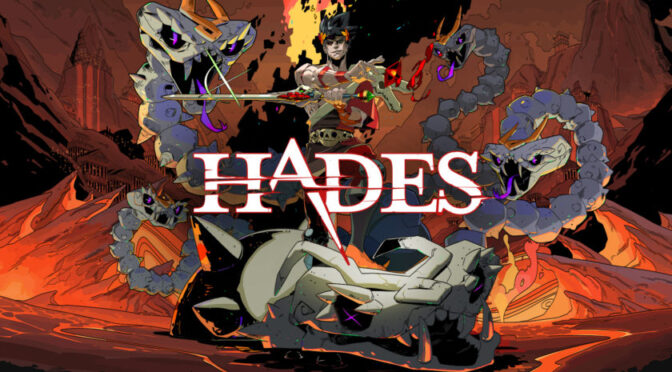
    Hades is a roguelike – a game in which you keep on repeating an arduous and difficult “run” through a semi-randomized set of levels. In Hades, you play as Zagreus, the titular god’s son, and the run is escaping the underworld. The semi-randomized part is a meticulously crafted set of variables: Not only do enemies change, but your uncles and aunts on Mount Olympus give you certain boons to help you in your escape attempt. For instance, Poseidon might imbue my attacks with tidal waves, whereas Zeus has the power of lightning. Every ability interacts, making sure that no two runs are alike.

    I think roguelikes are okay. I’m not a huge fan of the time investment involved in mastering and finishing one – often times, I get bored by the second or third run. But Hades has a hook: Every time you die, you end up with your father, and the story continues. This game is filled to the brim with beautifully recorded dialogue and superb characters, making sure you go for one more run, just so you know how the story unfolds.

    This narrative is a brilliant idea, no surprise coming from Supergiant, the makers of Bastion, Transistor and Pyre, who’ve always been strong storytellers. Bastion and Transistor exist on pretty much every computer, tablet or smart fridge, you should try them out, if only for the art style and the story. Or better yet:

    Hades. It’s on switch, so you can play it on the toilet.

  • Marvel’s Avengers

    Marvel’s Avengers

    If you know me, you know I love to gripe about video game stories. More often than not, the emotions they try to convey fall flat, as if they feel forced and faked for some reason. Video game characters just don’t feel like real people, and most of the games I’ve played this year suffer from this. Control. Assassin’s Creed Odyssey. Even The Last of Us II seems to miss the mark, be it by design: This game constantly veers away from humanity on purpose.

    Then why is it that a loot-based, mindless games as a service superhero brawler is the one to pull it off?

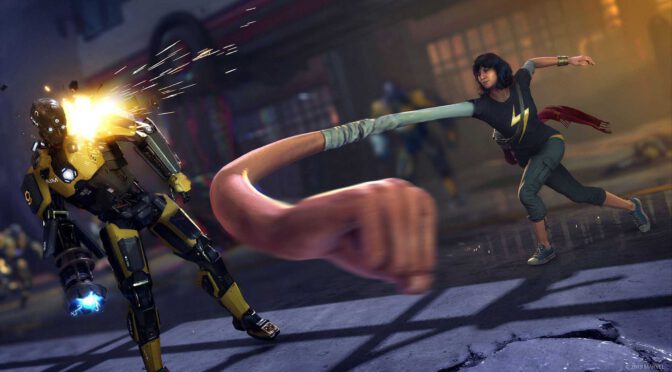
    For those not in the know: Avengers is a newly released videogame banking on the success of the Marvel universe. It’s basically got six superheroes that can punch, kick and shoot their way through wastelands filled with robots. As they do this, they level up and get stronger. Over time, more superheroes will join the cast, which can also be leveled up endlessly.

    These games are usually quite complex, so they need a sort of tutorial, usually in the form of a single player campaign. And funnily enough, this campaign is one of the most humane video game experiences I’ve played the last months. You are Kamala, a teenager given superpowers by a freak accident which caused the Avengers to split up. As she gets the crew back together, she grows into a superhero of her own. She’s also an insecure teen, an overexcited fangirl and a Pakistani-American Muslim.

    Kamala is one of the better realized characters in video game fiction. She is human through and through, and never gets lost in the wildly escalating videogame plot. Whenever something crazy happens (and crazy things happen, this is the Avengers after all), there’s an important emotional question to back it up. It comes as no surprise that this story stems from Crystal Dynamics, who succeeded in humanizing Lara Croft in their Tomb Raider reboot. But it’s a breath of fresh air nonetheless.

    Now if anyone wants to do some mindless superhero brawlin’, let me know!

  • Assassin’s Creed – Odyssey

    Assassin’s Creed – Odyssey

    Remember how I wrote about Assassin’s Creed Syndicate, and how somehow I keep playing those games? Yeah me neither so here’s a link.

    Suffice it to say after Syndicate, I did quit playing these repetitive map games. I did not play Origins, nor did I ever want to – even if it was advertised as “new and improved”. I had had my fill of the franchise, didn’t care about Egypt – and especially with Breath of the Wild revolutionising the 3rd person adventure genre, it just didn’t interest me.

    Then came Odyssey. An Assassin’s Creed game set in ancient Greece? Count me in?

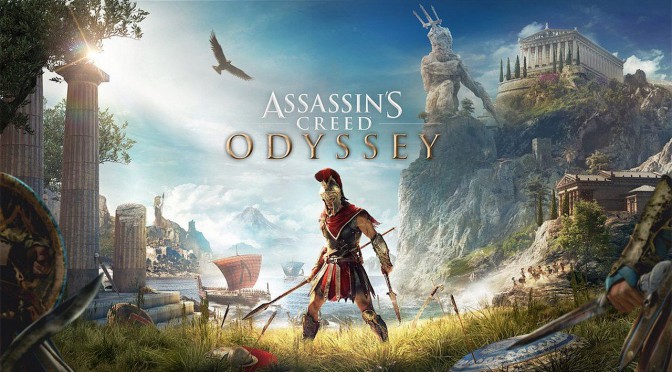
    And boy, is it a doozie. This game has just about everything. A gargantuan map spanning all of Greece. A boat. A leveling system. A skill tree. Mercenaries. A (very cool) cult for you to hunt and destroy. Dialogue trees. Player choice. A female protagonist – Kassandra! And: No minimap!!

    At first, I dove right in there. I wondered why I ever fell out of love with the franchise in the first place. It was like a second honeymoon, and I had a lot of fun destroying barbarian camps and the like.

    About thirty hours in, I had probably killed about a million barbarians, and had uncovered about a third of the map. Boy, this is a marathon, I thought, and made Kassandra visit Marathon. I was still feeling it, thinking this journey would lead somewhere.

    Then, about fifty hours in, I started growing weary. A couple of really promising plotlines started heading in a direction that was an immense disappointment for a fifty hour investment. And lo an behold, an hour later, the plot had completely derailed (without spoiling anything, let me just say “Pythagoras” – those who played the game will know what I mean).

    Boy, do I feel kind of burned. Yes, riding across Greece is a thrilling experience, and the vistas are as beautiful as ever. But somehow, I can’t enjoy them anymore, knowing the story has completely derailed. It just killed my genuine investment in Kassandra – and thus, in the entire game.

  • The Legend of Zelda – Breath of the Wild

    The Legend of Zelda – Breath of the Wild

    Sometimes, things come together nicely. Case in point: Pre-ordering a Switch – Nintendo’s console-handheld-hybrid – and having it come out three days after my brain surgery (more on that soon). I was hospitalised for three weeks with nothing to do but to practice closing my eyelid, smiling and walking in a straight line, and the Switch and Zelda gave me something to look forward to.

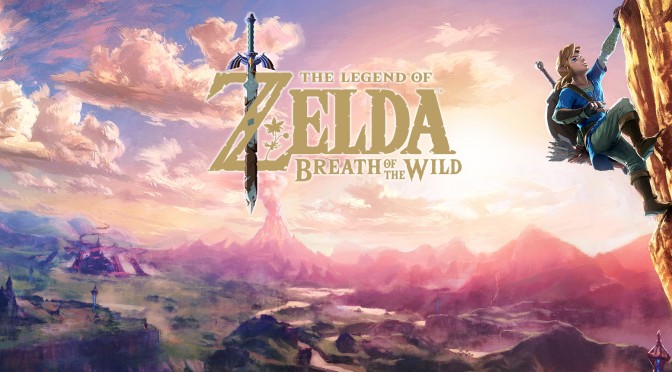
    And boy, was this something. Breath of the Wild does away with ninety percent of the core Zelda tropes, strips it of the baggage the series has dragged along over the course of thirty years, and just delivers a breathtaking open-world experience that’s all about exploration – and all that without even needing a minimap.

    It’s amazing. After two hours of a very open-ended tutorial, you have all the skills you need and one quest in your log: Kill Ganon. You can just storm Hyrule castle and have a go at him. But that’s not where the fun is at – it’s in discovering the world, looking for shrines (this game’s version of miniature dungeons) and using whatever means the game’s environment gives you to defeat the baddies and grow stronger.

    And while there is a lot of that, it never gets old. There is a seemingly endless stream of content to explore, from lava-filled lands to scorching deserts and jungles and plains. I couldn’t stop myself from discovering every nook and cranny and even after 40+ hours of playtime, I still felt surprised at all the creative situations the game threw me in.

    And then, when I finally stormed the castle, armed to the teeth with the finest armor and the best weapons, it felt like catharsis.

    I don’t know if the Switch will be worth it in the end – the console feels very bare-boned as it is – but Breath of the Wild is a true classic. This might just be the best Zelda ever made. And it’s certainly going to be the one I come back to most often.

    I seriously couldn’t wish for any other game at a time like this.

  • Fantastic Beasts and where to find them

    Fantastic Beasts and where to find them

    “My philosophy is worrying means you suffer twice.”

    Whoa, hey, he lives! Yes, in fact, I do – but I’ve been so caught up in work and life that I’ve had no chance to update this blog. But seeing how we’re on winter hiatus until after the holidays and I’m just gaming the day away, it’s high time for a little post.

    It should be no secret I’m a Harry Potter fan. I read the books on a regular basis. I rewatch the movies every couple of years. And I actually bought a gargantuan box set a while ago and watched all of the extra bonus stuff (very interesting!).

    So when I heard Fantastic Beats and where to find them was a thing that was going to happen in a cinema near me, I was wary almost immediately. Sure, this could be great, and I could get that giddy feeling I get when reading or watching Potter coupled with some fresh materials – but it could also be a disaster that, viewed pessimistically, could even destroy the original story. If you think I’m being overly dramatic: Star Wars did the exact same thing for me.

    Thankfully, Fantastic Beasts is not a catastrophe. One could even say it’s a really good film, with brilliant and dynamic new characters, gorgeous locations and a nifty story almost worthy of the original seven books.  And the original story? Still intact, enhanced even, as Fantastic Beasts expands upon some parts of the original Potter lore with things like the Obscurus and Grindelwald.

    But what Fantastic Beasts evoked most of all was that original sense of wonder the Harry Potter universe transports. The moment I saw the Niffler – a creature not quite like a platypus – I felt that uncanny “just out of reality’s reach” feeling these stories do so well. And one moment in particular, where we finally see Newt’s secret plan, is just breathtaking.

    All in all, worth a watch! Even if it spends quite a lot of its time (and its most exciting story twists) setting up a new franchise in ways that feel like a poor storyteller’s bad photoshop, with bits and nuggets of a broader (but very obscure) framework tacked on the otherwise brilliant narrative. It’s small moments in this story that irk me and wonder how much of it was rewritten while shooting to allow the franchise to grow from three to five movies – and I guess only time will tell how well that gamble payed off.

    (PS I cannot say how often I typed Fantastic Beats writing this post. I think that should be a thing)

  • Everybody’s gone to the rapture

    Everybody’s gone to the rapture

    Post-scriptum: I had this post prepared for ages, but somehow I never posted it. Seeing how this game is available for free on Playstation Plus in November, now’s as good a time as any to recommend this wonderful little game!

    I’ve said it time and again: We haven’t reached the bottom of the Jacques Cousteau-ian underwater world that is videogame storytelling. Sure, we are building increasingly more complex devices that allow us to dive deeper and deeper, but the true essence lying on the bottom of the barrel? Not yet.

    I’m not going to say Everybody’s gone to the rapture by the wonderful people at Chinese Room (well, I guess they’re wonderful because I believe in the good in people) is a revolution. It’s not. But it’s a wonderful storydriven game fueled by something most developers seem to forget: Genuine human emotion.

    Everybody’s gone to the rapture takes place in an abandoned village. Somehow, everyone’s just gone up in smoke – and it’s your job to find out what happened.

    Actually, calling it a job is saying a bit much. All you do it walk around and discover story tidbits that allow you to piece together the game’s bigger narrative. Angry internet nerds, of which there are quite a few, mockingly call this game a “walking simulator” – a game in which you walk around until things happen. You can’t die, you can’t lose – nothing gameplay-related is at stake, just the elements of the story.

    And when I say “elements”, I mean that in the most literal way possible. Everybody’s gone to the rapture doesn’t tell a linear, coherent story. Instead, it opts to feed you bits and pieces, breadcrums relating to a handful of characters, and lets you piece it together on its own. And like a lot of games, the pieces are a lot more colourful and interesting than the finished puzzle.

    If you’re playing this expecting a cathartic endgame, you’re going to end up disappointed. If you’re just enjoying the sights and taking the emotions in the way they come at you? You’re in for a treat.

    Everybody’s gone to the rapture is short – as is almost always the case with these games. But personally, I think it’s got precisely the length it should have. It doesn’t drag, doesn’t overtell its own story, and knows precisely when to call it quits. And frankly, if you’re fond of exploring, you can get way more mileage out of it than I have.

    In a world of endless collectibles and other doodads that trigger a sense of OCD I never knew I had, this game is a godsent, ideally enjoyed with or after a glass of good scotch.