Category: Games

Stuff about games.

  • Bioshock 2

    Now there’s a job I would not have wanted: creating Bioshock 2. The first installment of the game was nothing short of revolutionary – toying with us the way only an interactive form of medium can do – so, even with the lead design and gaming’s biggest asshole leaving the project, expectations were… astronomal. I guess that’s why I waited about six months to finally write something about this game. The first playthrough was awesome, but second, a half a year later… was breathtaking.

    A breath of fresh air

    It was obvious, right off the bat, that the second Bioshock installment could never live up to the first one – the twist was just too much, too defining – so they don’t even try to do that. Instead, what they offer you is this: a small scale story with a deviously closed narration.

    The entire thing features around the little sister – big daddy connection, and tries to get as much symbolism in the plot as possible. In doing this, it becomes a Freudian homage to the Oedipus complex, in which little boys kill their fathers to be with their mothers. The game does the exact opposite and in doing so, it doesn’t try to copy the analogy but just comments it.

    Drill!

    To do this, the game drops you in the suit of a Big Daddy – drill inclusive. It boils down to this: you’re trying to find your little sister, who’s been captured by her real, biological mother. This leads to a small, emotional story, in which Sophia Lamb – the child’s mother – plays an unbelievably satisfying role, only helped by the fact that she’s a psychoanalyst.

    The Big Daddy controls just like you would think it would – huge and massive, but still quick and nimble. This means no more wrench. Instead, you get the drill, which – when pimped to the max using the tonics and weapon stations – is simply breathtaking to use. It makes the game less a shooter and more of a first person adventure game. Which I simply love.

    In all…

    Everything that made the first game great is still in place in the sequel: a gripping story, the Rapture atmosphere, a history of audio diaries and moral choices that affect the outcome of the game (which, in my opinion, is handled a lot better in this one). Sure, storywise, it can never overshadow the first game. But they’re humble and down to earth: they don’t try, and were only mildly damned by the almighty internet.

    Everyone can see that Bioshock 2, as a game, is better than the first. There’s so many more things to do (protecting Little Sisters! Killing Big Sisters! Traps! Underwater sequences!). So please, play the first one before you play the second. Because it’ll be pretty hard to go back.

  • Professor Layton and the Diabolical Box

    Professor Layton and the Diabolical BoxAs you undoubtedly know by now, I have a soft spot for a consistent narrative in video games. It’s something video games – as opposed to the other media I review – severely lack, and in my opinion one of the key reasons they don’t get the critical acclaim they should. Whenever they do, the consistent narrative is there.

    My case for the point I made above is the wonderful Professor Layton and the Diabolical Box, the sequel to the very-popular-with-a-very-small-crowd Professor Layton and the Curious Village. The game remains the same, but the story told is different. Just the way I wanted it to be.

    Layton’s apprentice saves the day!

    Professor Hershel Layton is a puzzle solving expert living in London with his apprentice, the boy Luke. Together they solve riddles and enigmas – all while upholding the general rule of being not only smart, but being a gentleman. Throughout the story, they talk with a thick British accent as they scientifically unravel mystery after mystery.

    The game works as an interactive story, much like those typical Japanese games – you get pictures of people on your screen and read what they have to say. In between of the story segments you wander through the area, talking to people. A conversation usually ends in a puzzle, which can be all sorts of stuff. You could inquire about the box the title refers to and get a puzzle about a bucket of water. The game never hides the fact that it is a puzzle-solving game (or a video game in general), so don’t be surprised if all people in some backwards country village spend their days with mind twisters.

    I think I’ve got it!

    The thing is, I don’t really care all that much for puzzles. I think puzzles are fun for a while, but building a whole game around them doesn’t sound all that interesting. What keeps me coming back, however, is the wonderful charm that hangs around every aspect of the game – the characters are cute, their voices sound good, the music fits, and last but not least: the storyline is great.

    Do you remember seeing a Disney film as a kid? Remember being immersed in this magical world? That’s kind of what Professor Layton does to me: it sucks me into a really, really nice storyline which makes sense from start to finish. You could argue – and perhaps partially rightly so – that these kind of stories are directed towards children. I wouldn’t say you’re wrong, per se, but just that you’re making the truth a bit more simple and plain than she is. Harry Potter has shown us that the key to winning the hearts of adults is through (their) children. That’s the kind of story Layton tells us: a cute fairytalelike story about gentlemen who find a logical solution to every kind of problem. Kind of like plumbers in top hats.

    In All…

    So even if you dislike the idea of solving about a hundred puzzles, if you like consistent and fun stories, you will probably like Professor Layton and the Diabolical Box. It’s cute, it’s touching and it never tries to be more than it actually is. It’s a selfconscious videogame that never tries to convince you of anything, and just because of that, because of the fact that it just acknowledges its existence and shows you it is there, it is a truly marvellous experience!

  • LOST Via Domus

    You’re a fan, or you’re no fan. As far as LOST goes, I am a fan: I faithfully watch the episodes over and over looking for clues, write stupid reviews that rave on and on about the tiniest little things, I listen to the podcasts and actually enjoy the jokes about the wooden leg… so naturally, I got the LOST videogame, which goes by the name of LOST: Via Domus – a poor excuse for pig latin. How could they not get that right?! In fact – this question isn’t just valid for the title, but for the majority of the game and its handling of the reasons why a fan would buy it.

    Cross-medial Copying

    It is my opinion that TV series, as a format, are easy to transfer to a video game. Way easier than a film, to say the least, because how do you copy a two hour flick into an interactive experience that lasts about ten hours? In this event, the LOST videogame did just about everything right: they made a sidestory that spans over the course of the first two LOST seasons. This side story is told to us in seven different chapters, or episodes, each complete with its own “Previously on LOST”, a title screen and the ending screen. So it really does play like a television series. Using episodes also makes it easier for us to keep track of the story – middle parts of epic game experiences can sometimes drag alone a bit; it’s nice to see a cliffhanger at the end of every 30-40 minutes of gameplay to keep you motivated. In this way, LOST: Via Domus gets the job done. You just play “next to” the series, following great turning points as they go along (e.g. the opening of the hatch) and interacting with the Losties.

    And that’s where it kind of goes wrong.

    First off: let me say kudos to the production team for pulling this off. Some actors from the show decided they would help out and voice their characters (Claire, Desmond, Ben…). Absent from the list, however, were Jack and Locke, amongst others. So they had to get replacements. And while the replacements do sound like the real deal, you can just feel they’re not the real deal. And, however hard Ubisoft and abc studios may have tried to fix this gap, to the (extremely picky) LOST fans, they just fall short. On top of that, the characters just look plain awful – Locke looks too skinny and young, Jack looks like a walking zombie, Claire looks like a molten Barbie doll… It’s crazy and freaky.

    Illusion ruined! Or not?

    Thank God, we have the creative team behind LOST to help us out. They delivered us with a good, not great, story – carefully making sure not to break any LOST dogmas along the way – that kept me interested throughout the experience. In each of the seven episodes, there are several flashbacks in which we find out more about our main character: why he was in Syndey, who he was there with and what he was doing. This past takes a few very dark turns that apparently caused some players to detach themselves from the main character. It quickly became apparent, however, that in true LOST fashion, this story was going to be about a lost soul looking for the right path: redemption. In this way, the story was good enough. Not great, but good enough.

    On top of that, the surroundings were also decent. They ranged from sub-par (the crash site looked horrible) to wonderfully detailed (like the jungle and the Black Rock). It’s nice to finally walk around the hatch, and do all those crazy things the Losties did, like typing in the numbers, hiding from the monster and getting dynamite from the Black Rock. So, for fans – if you can look at the already mentioned disappointments – this kind of stuff is pretty cool.

    Questions, questions, questions

    So, given the fact that LOST: Via Domus is a mixed bag, should you play it? If you’re not a fan of the series, I don’t see why you should. If you are, however, it’s worth it for the few crazy, mindboggling plot twists alone. The ending to this one leaves you scratching your head, much in a way a season finale does. For that alone, it’s worth the few hours of “video game” before that. It just goes to show that LOST is what LOST does best: telling us a story, making us shut up and look at the pretty pictures.

  • Bioshock

    Never before have those three words – “Would You Kindly?” – had such an impact on a video game. Bioshock delivered me a rock solid ride that was just long enough, and touched me at a weak spot: narrative in video games. This narrative proves a lot, and puts just about every other one in a video game to shame. And yes, that includes Half Life 2 and Portal, who both have been critically acclaimed for their great storytelling.

    “Hurry, Mister B!”

    Bioshock is a first-person shooter featuring the ever-so-popular “silent protagonist”. In layman’s terms, this protagonist doesn’t speak throughout the entire game (one line excluded). Because the action is first-person, this is supposed to raise our immersion in the game: we are no longer supposed to identify ourselves with Mr. Angsty Teen #35 (I’m looking at you, Square Enix), but we can just imagine our little protagonist the way he is.

    In Bioshock – much like in Half-Life 2 – our main character has a story, however. A story cleverly implanted in the convoluted web of storylines that is… well, Bioshock: a story that leaves behind all consensus on what a storyline in a first person shooter should look like. No, in this game, there are no aliens, no UFOs, no demons from hell… there is just the race of men, and their fear. The fear which caused people to run and hide on the bottom of the ocean, in a place named “Rapture”, experimenting with genetic experiments.

    The story is all around you; even though you are never talking, your surroundings are. As you venture through the underwater world that is Rapture, you find audio diaries, get calls, hear music, see posters on walls, look outside the window… This is a very sensoric game to say the least: it speaks to your senses, and even if you’re not really noticing anything in particular, you’re always noticing some things. Writings in blood splattered accross a wall. A record player playing Buddy Holly. There’s just so many little things in this game that makes every other game feel incredibly stale storywise. It just goes to show that the medium of video games really isn’t used to any truly outstanding storytelling. Bioshock is like a film by Tim Burton, in which the smalles details has been designed especially for the experiene. No room is the same, ever.

    Shooting Bees

    But what about gameplay? Bioshock is truly a game of this generation: it’s challenging, rewarding and almost never frustrating – three traits good games these days have to have (unless they are especially made for one trait – being especially frustrating for example). With the exception of one (fairly easy) moment, you can never truly die. Dieing takes you back to the nearest “Vita Chamber”, where you are revived. you get to keep all your weapons, plasmids… no penalty whatsoever. This keeps this first person shooter from becoming the next best Quickload fest.

    On the other hand, you are out of ammo a lot, which can get pretty frustrating at times. It should be noted however that about half of your arsenal – your “plasmids”, tonics you insert into your veins for special powers – don’t run on ammo and can generally be used a lot longer. Yes, they run on “EVE” (Bioshock’s fancy word for “that blue bar”), but I never had any problems maintaining my EVE level – as opposed to my ammo. The downside to this method was that plasmids tend to be more crowd control and less damage. And in a pickle, you’ll truly swear that you can keep freezing your enemies or send bees at them ad infinitum but never truly kill them. Alas, my plan on playing the entire game with only killer bees soon seemed to cumbersome to bother.

    A free man chooses

    Shooting things will only get you so far. In order to gain more powers aside from your plasmids, you need to gain a thing called ADAM. Adam enhances your body, giving your extra defensive or offensive abilities, more health, more EVE, … You can harvest it from “Little Sisters” throughout Rapture, and this is where the moral dilemma sets in. Little Sisters are, as you have probably already figured out, little girls. Upon getting to one, you have the option to either harvest it or rescue it – the latter results in fewer Adam for you to spend. On the other hand, it does make you feel better about yourself. Every little sister is in turn protected by a Big Daddy; you have to get through the Big Daddy in order to get to that sweet, delicious Adam. Big Daddies take quite a punch, and you’ll have to be quick and resourceful in order to take them down.

    So you can either harvest, rescue little sisters, or even choose to leave them alone. The key word is choice; a key word that swiftly summarizes the entire game: you’re free to choose what you do. You can play it passively, relying on crowd control while sneaking in a corner; or you can go all-out damage. The choice is up to you – and who knows? Trying something different might make for a wonderful second playthrough.

    The Sweat of Your Brow…

    Bioshock is more than a videogame. Bioshock is a piece of contemporary literature – or at least based off of it (Ayn Rand). It perfectly summarizes the spirit of the people in the first half of the twentieth century: a time where insecurity and fear of nihilism within people led to belief in charismatic leaders who would without a doubt create a perfect society. A society where everyone would be pretty, healthy and smart. More than fifty years later, we of course have long since realized that a society like this is impossible. Bioshock, however, manages to perfectly capture the mood of the era without mocking it. And it is this strange kind of seriousness towards the era and its quirks that makes Bioshock the closest thing to literature, and thus “art”, to date.

    And while we wait for a game that will rival this one in its greatness, we might as well ponder the answer to the following question: “Is a Man Not Entitled to the Sweat of His Own Brow?”

  • Alone in the Dark

    What happens when you have an age-old franchise in a dubious, almost-bankrupt company’s hands? They might do something irresponsible with it. Like: lend the franchise to a small production house and let them make it into a big title. And what does that lead to? An extremely, ambitious, great videogame that’s  flawed in the most unbelievable places. This basically sums up my weekend with Alone in the Dark: when it blew me away, it blew me through the roof. When it annoyed me, I blew it through the window.

    “You’ve got game in my movie!”

    About Alone in the Dark: it’s an almost-revolutionary step in the creating of and thinking about video games. It’s survival horror (like Resident Evil, Silent Hill, …). It does however throw a lot of genre and general conventions out the window. There is no pointless hunting for keys. You simply bash the door in. There is no restriction in what you use as a weapon. This game comes with what Atari and Eden have proclaimed to be “Real World Rules”, and they get the job done: combine a bandage and an alcohol bottle and you got yourself a molotov cocktail. Add tape to said molotov cocktail and you’ve got a sticky bomb. Combine your health spray and a lighter and you can create a  flame thrower. There’s a lot of creative ways to get your work done, and that’s where this game shines.

    That’s one way Alone in the Dark changes the way we think about video games. Like GTA IV’s “smash a window to steal a car” novelty left me wondering why all people in GTA: San Andreas left their cars unlocked, this game will cause me to wonder why Resident Evil protagonists don’t just use their fists to beat zombies to a pulp when they run out of ammo. There’s a second way however. This game comes packed as a DVD. You insert the game, and you can “continue” your game where you left off, or select a part in the game you want to play. Can’t get past an annoying section in the game (which will happen, but more on that later)? You can actually just skip it if you want. Want to replay that awesome scene? Just hit the rewind button in your menu, and you’ll be there in no time. While this might sound shady
    at best, it’s a really cool tidbit that will get everyone to enjoy 90 % of the game instead of just the beginning. 90 %, because the last “episode” is left locked until some requirements are met. It’s so obvious that these guys are fans of serialized drama shows (and of J.J. Abrams, apparently) and that’s a big plus in my book.

    On top of that, it has to be noted that this game oozes with tension. It’s not a scary game, which will undoubtedly put off a lot of gamers. But it’s an action-packed, storydriven adventure game that will have you on the edge of your seat with your heart racing nonetheless. The story’s a bit dodgy – and I’m not a huge fan of the swearing (which means a lot, coming from ME of all people) – but what do you expect from a survival horror game. The first AitD game had you fighting a giant tree – this is not a step down in the least.

    A bug’s life

    It’s not all cakes and eggs or whatever that is called in ye ol’ English, however. It has to be said that this game is the buggiest thing I’ve seen on a console in a long time. Bugs usually don’t annoy me that much, but in this game, it’s different. You see, the “real world rules” work wonderfully most of the time. Everything burns realistically enough and the combinations make sense. So, the arbitrary point of the game where the most bug testing is done, seriously works. Kudos! What doesn’t always work, however, are the wonderfully cinematic experience the game drags you through. A building is falling apart, and you’re in it, but you’ve got no idea where to go. Run towards the light? Dead. Run in the darkest corner? Dead. Stand still and do nothing? Winner! But what really frustrated almost every game to no extent (it was saved by me thanks to the wonderful music), is the car chase through the apocalyptic New York.

    Now doesn’t that seem unbelievably awesome? It would be, if it weren’t for the fact that the trajectory you’re supposed to do isn’t always clear, and the sequence sometimes gets bugged because the other cars can’t seem to get their acts together and decide where to go because the AI doesn’t really work all the time. Seriously, Atari. This game could have been so much better if it had gotten a bit more bug testing on areas where it didn’t seem obvious it was needed. I can forgive the fact that the car doesn’t quite feel like a car – GTA spoiled us – but these bugs are just laziness (or lack of time in design for decent bug testing. Damn you Atari?).

    Things I will also not comment on: the complicated control scheme. It’s okay. It works. It’s not broken. I love the fact that you can use the right analog stick to swing burning furniture around, but obviously this leads to complaints amongst people who played this game. It basically means you lose a second analog stick as a camera using device. I personally think this – and the fact that your character moves like Ryo in Shenmue – adds to the tenseness of the game. It’s kind of odd when you’ve got real world rules for everything else though: it’s as if you’re a kitten being pulled out of a cage by paws and pushed back inside by the head. But less painful. Just in a strangeness kind of way.

    I also won’t complain about the very small amount of inventory space (check the screenshot to see a view of the inventory, which I
    find wonderful). There’s a line to pull between dubious design choices and blatant mistakes. They want to make it realistic? This is a good way to do it. If you’d apply their “real world rules”, however, we’d have to note that our protagonist has pants. Pants with pockets.

    The bottomline…

    And suddenly, those crazy ratings made a bit more sense: to some people, this game will undoubtedly be broken. In this game, you will die a lot. You will swear a lot. At a lot of times, you will not know what to do. But, on the other hand: you will cheer a lot. You will gasp a lot. Your heart will be racing a lot. But you’ve got to give it a chance. You’ve got to find a way to love this game. If you can’t look past the sluggishness and bugginess in this game, you’ll never be able to enjoy it. If you can, however, you’ll like it. I only hope that developers learn some lessons from Eden’s clever gaming design, where passages can be skipped, real world rules apply and a wonderful sense of tension is created through interactive cinematics.

    Oh, and Eden, if you read this: please, please please pretty please release a patch for this. This game is too good to be treated like this. Just fix the rough edges and it’ll be much, much better…

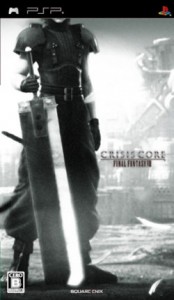
  • Crisis Core: Final Fantasy VII

    Crisis Core(Note: this review was originally written in two pieces.)

    Since, in between of writing papers, going to some classes and waiting for my thesis correction to arrive, there isn’t much to do for me around here, I spend most of my free time either going swimming or playing video games. Most games just don’t manage to really suck me in like they used to, but it’s good enough to pass my time with, I guess. One of these games is Final Fantasy VII: Crisis Core – on PSP. And I’m impressed.
    When I first played Final Fantasy VII (the original game), I was about fifteen years old. I remember it as being the video game that left the biggest impression on me during my high school years. It’s this strange kind of being flawed that makes this game so legendary: there’s certain unexplained plot devices, and just because they are not or very poorly explained they work so well. You can fill in the blanks and create your own story. And this is basically what Crisis Core is all about: it takes one of these plot holes and expands it.

    (If you haven’t played Final Fantasy VII and plan on doing so, you might want to skip this)

    In the original game, we have Cloud – our protagonist – and ex-military officer in a group with amongst others a high school friend of his. When he left his little town, he went on and on about “making it in the big city” and becoming famous. And when he comes back all these years later, his head is filled to the brim with stories about big wars, great villains, strange occurances… none of which he actually experienced. In fact, he become so obsessed with an other member of the army – Zack – that he took what happened to Zack and made it into his own story.

    The thing is that, whatever happened to Zack is explained in side notes: you activate little cut scenes when you’re at the right place at the right time. There’s not much to these scenes nor do they contribute to the main storyline in Final Fantasy VII. There’s pieces of a bigger puzzle you just can’t figure out.


    And this plot hole is exactly what Crisis Core is all about: Zack’s story from A to Z. Some things you already know (his relationship with Aeris, his parents at home, his showdown with Sephiroth, his escape with Cloud… and his death at the edge of Midgar). It’s like you’ve been given a road map with waypoints, but what the route is going to be, you
    have no idea.

    You might think it’s entirely insane to make a prequel to a game 10 years after it’s been released. But really: it makes
    perfect sense. It entered the porcelain store that was FF7’s story and added some vases. Really pretty, tragic looking vases. And maybe, just maybe, it’s so good because I know it’s going to end badly?

    How do you write a story if you know your target audience knows the ending? There are American Beauty, or 300 – both stories of which we kind of knew the ending (or great plot twist, in American Beauty’s case) beforehand. Neither of those had me begging that the end would never come. Neither of them grabbed me on an emotional level. Then, how do you do it? Apparently, Final Fantasy VII: Crisis Core knows. It knows how to walk into a porcelain store without breaking anything and make one of the most beautiful vases in that place even more beautiful.
    Needless to say, Crisis Core’s ending tore me apart. We knew that after the Nibelheim incident, Zack and Cloud were offcially labeled dead. But they aren’t. We knew they would escape their lab and go back to Midgar. But what we didn’t really know was why: we didn’t know Zack wanted to go back to see his girlfriend, Aeris (yes, exactly, her). We knew they’d get waylayed along the way, and that Zack would come to a most tragic end. But… we didn’t know that it would hurt this much.

    What is the answer to my question? I’m not quite sure myself – yet. But Zack’s final battle against his own company tore me apart. I never quite understood the use of the DMW (which is in essence a slot machine displaying all of your friends – if three line up, you get a power up), but during that battle it finally made sense: one by one Zack’s friends start fading away, until no one remains – except for, exactly, her. Every fade is accompanied by a short movie in which the fading friend says good bye. When, in the end, only Aeris remains, and the DMW starts glitching all over the place, she doesn’t say good bye…

    She says she’ll be waiting for him until he finally comes back. And, well, if you’ve got someone waiting for you… that just breaks your heart. And that… that’s how it’s done. It had been a while since I was last moved by a story like this.

    Square Enix – you just regained my trust!