Category: Movies

Stuff about movies.

  • Fantastic Beasts and where to find them

    Fantastic Beasts and where to find them

    “My philosophy is worrying means you suffer twice.”

    Whoa, hey, he lives! Yes, in fact, I do – but I’ve been so caught up in work and life that I’ve had no chance to update this blog. But seeing how we’re on winter hiatus until after the holidays and I’m just gaming the day away, it’s high time for a little post.

    It should be no secret I’m a Harry Potter fan. I read the books on a regular basis. I rewatch the movies every couple of years. And I actually bought a gargantuan box set a while ago and watched all of the extra bonus stuff (very interesting!).

    So when I heard Fantastic Beats and where to find them was a thing that was going to happen in a cinema near me, I was wary almost immediately. Sure, this could be great, and I could get that giddy feeling I get when reading or watching Potter coupled with some fresh materials – but it could also be a disaster that, viewed pessimistically, could even destroy the original story. If you think I’m being overly dramatic: Star Wars did the exact same thing for me.

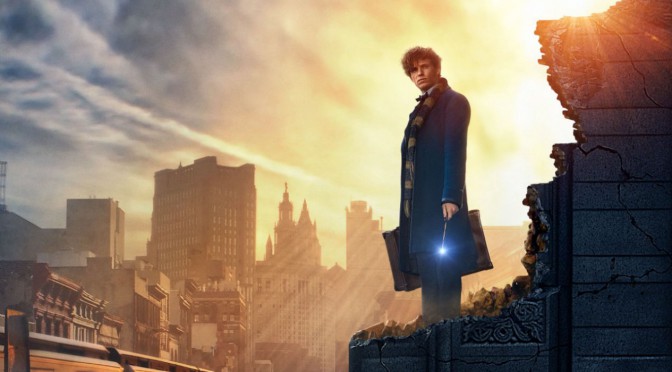
    Thankfully, Fantastic Beasts is not a catastrophe. One could even say it’s a really good film, with brilliant and dynamic new characters, gorgeous locations and a nifty story almost worthy of the original seven books.  And the original story? Still intact, enhanced even, as Fantastic Beasts expands upon some parts of the original Potter lore with things like the Obscurus and Grindelwald.

    But what Fantastic Beasts evoked most of all was that original sense of wonder the Harry Potter universe transports. The moment I saw the Niffler – a creature not quite like a platypus – I felt that uncanny “just out of reality’s reach” feeling these stories do so well. And one moment in particular, where we finally see Newt’s secret plan, is just breathtaking.

    All in all, worth a watch! Even if it spends quite a lot of its time (and its most exciting story twists) setting up a new franchise in ways that feel like a poor storyteller’s bad photoshop, with bits and nuggets of a broader (but very obscure) framework tacked on the otherwise brilliant narrative. It’s small moments in this story that irk me and wonder how much of it was rewritten while shooting to allow the franchise to grow from three to five movies – and I guess only time will tell how well that gamble payed off.

    (PS I cannot say how often I typed Fantastic Beats writing this post. I think that should be a thing)
  • The Boxtrolls

    The Boxtrolls

    Anyone who’s halfway into stop-motion should have heard of Laika. The makers of Coraline and Paranorman are the Pixar studios of moving dolls around and taking a painstaking amount of pictures. Coraline (based off the Neil Gaiman novel) was brilliant, and Paranorman (which centers around a little kid who can see dead people) is one of my favorite movies to date. I think that’s the reason I shied away from watching the Boxtrolls – I was afraid of it being bad.

    Thankfully, it’s not!

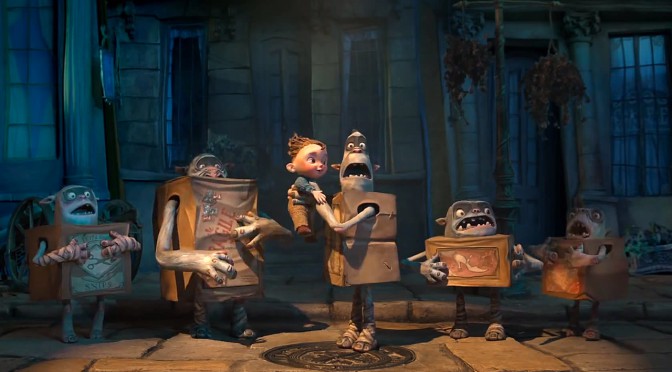
    The Boxtrolls takes places in a victorian-era metropolis (that strangely enough centers around cheese), in which the current order (defined by the color of their hats) fight the terrible beings that live underneath the streets: The Boxtrolls. Boxtrolls are precisely what the name suggests: Trolls that live in boxes. They are peaceful creatures that are misunderstood and find themselves hunted by a group of red-hatters (two of which have a delightful back-and-forth existential crisis about what side they are really on). Laika wastes no effort in finding visual ways to incorporate these boxes into the story, with boxtrolls stacking on top of each other to climb fences or walls, or them sleeping on top of each other in a perfectly ordered cube. The first insights into their home are downright stunning, with dozens of little doodads moving around, and set the bar for stop-motion animation (which had previously been set by – you guessed it – Laika!).

    But all of this is a given, really. You don’t go see a Laika flick and expect it to look like garbage. It’s the story where Laika often falters. Coraline had little issues in this regard: after all, it had a great novel as a backbone. Paranorman, however, sometimes faltered: Some of its scenes were kind of strange, with no clear beginning or end – and had it not been for its painful honesty, it would have been a disaster.

    Thankfully, the Boxtrolls is confidently written, with a thematically sound story about human (and boxtroll) nature, and some great exchanges about family. Compared to Paranorman (and Coraline), the movie loses some of its honesty and feels more like a generic blockbuster, but it nails the emotional beats, and never feels like just another popcorn movie.

    In all, there’s no doubt this is the weakest of Laika’s three feature films. But it’s still miles above most animated movies, which is saying a lot. And in a world of computer technology, there’s something to be said for a movie where you can feel the handiwork involved. Like all Laika features, Boxtrolls feels alive.

  • Stranger Things

    Stranger Things

    Throughout the millions of words I have written on this page over the last ten years, it should come as no surprise to you guys that I love Stephen King. There’s something about his work that perfectly captures horror without losing track of his characters. And sure, there’s some books I haven’t finished which I should have (Needful Things, the first part of The Dark Tower), I finished some that I really shouldn’t have (The Tommyknockers, Cujo), and he almost never quite nails the ending (The Stand, 11/22/63) – but there’s something that causes me to come back time and again.

    Now, I could write the same paragraph about Steven Spielberg, about E.T., Gremlins and Jurassic Park, an how these movies defined my childhood, about how Spielberg created a brilliant synergy between interesting characters and science-fiction through the use of wonder. About the Spielberg face, and so on. And I did write exactly that.

    If you’ve read these two paragraphs and haven’t fallen asleep, Netflix’s Stranger Things might just be the thing for you. It’s the perfect brain child of King and Spielberg: A sci-fi horror show (light on the horror, thankfully) set in 1983, about three kids searching for their missing friend and discovering a whole lot of nasty stuff on the way. Both visually and storywise, it’s a treat, heavily paying homage to the eighties. You’ll recognize shots from old eighties classics, and some of the story beats feel like someone fired up the King playlist on an old grimy jukebox.

    Let there be no doubt, though: Stranger Things is more than a wink and a nudge, or a weird inside joke for nerds like me. It’s a touching story about friendship, motherly love and growing up, and accessible to a broader audience than this review might imply. Give it a try – I was hooked within minutes.

  • The Peanuts Movie

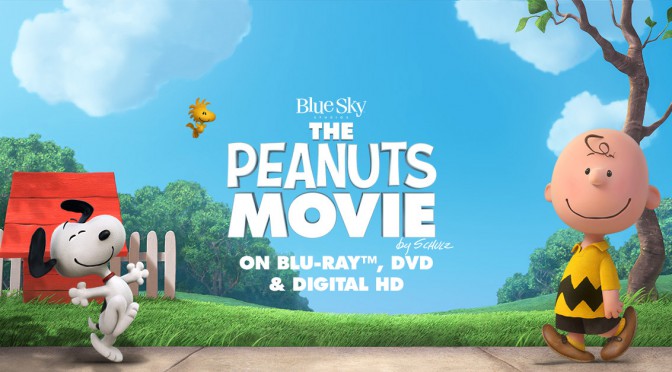
    The Peanuts Movie

    I actually wanted to go see this movie in the cinema last Christmas, but because of the stress of moving and spending Christmas abroad (and Star Wars, okay, a whole lot of Star Wars), I missed it. Not that big a deal, to be frank: The Peanuts Movie works best when it’s an intimiate TV-level affair, and falters precisely when it tries
    to be more.

    I’m not exactly what you call a Peanuts fan. I have a basic understanding of the franchise, read a cross-section of the comics, watched the Christmas and Halloween specials a couple of times as a kid, and I played a Snoopy game on Game Boy (it was hard) – but I’m by no means a fanboy. Okay, reading that sentence again, that might not entirely be true. But in defense, I didn’t even know this movie was coming out until there was a 5-cent therapy booth at Potsdamer Platz (unfortunately, the doctor was not in).

    The Peanuts movie – surprise incoming – centers around the titular characters, with in the middle: Charlie Brown, who is in love and will do anything to not have to go win the lucky lady’s heart. For some reason, Charlie Brown is considered an American hero, like Mickey Mouse or Rambo – described as an eternal optimist who never gives up, no matter how often Lucy pulls away that darn football. I never quite understood that: To me, Charlie Brown is a coward, who needs his friends (and dog) to get anything done. This makes for an interesting – but highly frustrating – main character: He might say he’s always trying to get the best outcome, but really he’s trying to get out of doing anything. Charlie Brown is not a man of action, and I’m amazed they actually managed to create a coherent, funny and touching story around him.

    Somehow, it felt like the movie’s creators had the same fear, too. That’s why they decided to devote about a third of the flick’s screentime to Snoopy and his overactive imagination. Snoopy’s the exact opposite of Charlie Brown: He’s a dreamer, a hands-on happy-go-lucky dog who can go on any adventure possible. The Peanuts Movie opts to bring back the flying dog shed and the red baron. These sequences go all out on action and chases like there was some leftover budget in a drawer somewhere and they had no other option than to spend them.

    I know, for some people, Snoopy going all-out bonkers is Peanuts. I just found the sequences stylistically bland and completely forgettable. Suddenly, I was watching a regular animated movie and not a wonderfully crafted, somewhat extraordinary slice of Schulz-like animation.

    Because this movie does look wonderful – in a way that perfectly encapsulates The Peanuts universe imagined by Charles Schulz. The characters seem to be missing frames when they move, they switch from the typical Schulz 3/4-frontal perspective to profile with no frames in between the way he drew them, and the colours mimic the TV specials perfectly. The Peanuts Movie is a perfect modern interpretation of a franchise that no one really knew how to bring back to the screen.

    If you’re like me and you missed this movie in theaters, be like me and watch it on TV. I think it’s the best way to experience The Peanuts. And I won’t tell anyone you fast-forwarded through the Snoopy bits.

  • X-Men: Apocalypse

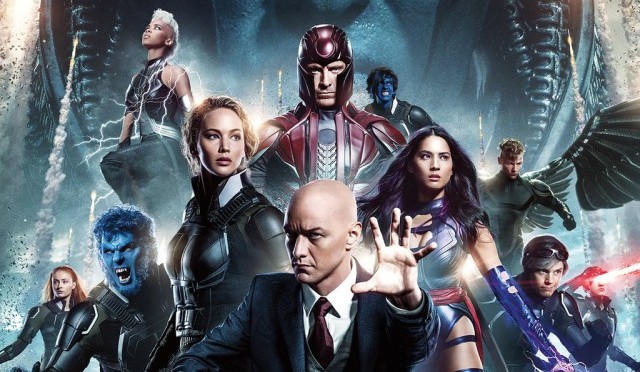
    X-Men: Apocalypse

    Warning! Massive anecdote about myself incoming!

    When I was in my first semester at the dffb, we had to partake in a directing seminar led by the wonderful Marin Marchewski – a seminar in which we had to, well, direct a scene that was handed to us without altering any of the dialogues. Needless to say the dialogue was terrible, and 24 year-old bitchy Bert was annoyed. So during our flat’s Halloween party, I snapped two girls – one dressed as Sally from the Nightmare before Christmas, one as Lara Croft – and made them perform the scene handcuffed to chairs in a boiler room I hung full of lolcats.

    The result was terrible, but thankfully, the layers upon layers of irony in that 3-minute piece of art saved 24 year-old Bert’s skin. After all, I knew it was terrible, right? Marin cast his critical eye on my work, rattling the keychain in his pocket as he always did, calling it a “persiflage of nothing in particular”. Then, in another one of his typical mannerisms, he proclaimed “we should go for a smoke”.

    We stood on the balcony, him dragging his cigarette, me enjoying the artificial background noise blaring from the speakers at Potsdamer Platz, feeling particularly smug. Then, he looked over to me and, with one sentence, smashed my smugness to smittereens:

    “If only you’d have tried, you might have learned something.”

    That moment might have been the single most defining experience at film school. It’s one of the few occasions where I didn’t learn about the craft, but about myself – about not hiding between irony because I’m insecure about my work, but just flat-out going all-out and taking the risk of getting hurt.

    It was also a sentence that popped into my mind during Apocalypse.

    “The third one’s always the worst”, Jean grey suddenly says, walking out of the theatre, talking about Return of the Jedi while she was actually referring to the Third X-Men in the original trilogy, The Last Stand. Yet in that moment, I couldn’t help but shake the feeling the psychic girl was talking about the very movie she was in – which is also a bloated mess overstuffed with paper-thin characters.

    In that moment, I knew Apocalypse had quit trying. Apocalypse knew it was terrible, and it just went with it like I had. Jean Grey was the lolcat hanging from the wall, feeling smug because she knew she was part of something bad – and that make it okay.

    If only Marin Marchewski had been there for Jean.

  • Captain America: Civil War

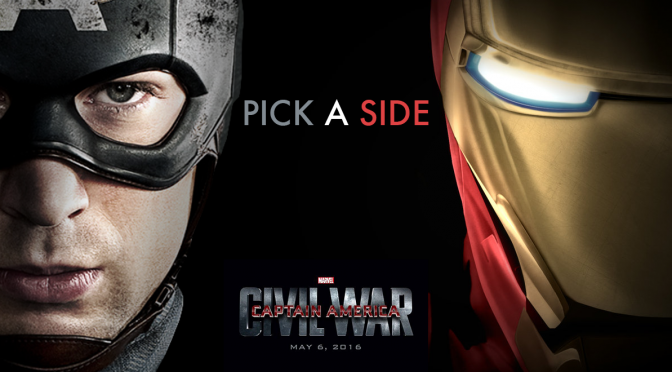
    Captain America: Civil War

    I’m gonna be really honest: I’ve started getting a bit burned out on the Marvel Universe. The creeping feeling started when I watched Age of Ultron, and has been steadily growing ever since. Obviously, Marvel brought this upon themselves, with their incessant flow of movies and series that are supposed to be different, but have striking similarities in story and tonality: Bad guy comes in, funny banter, fight scenes, Stan Lee cameo, more funny banter – the end.

    And this is why I advise you go see Civil War. No, not for the Stank Lee cameo, but to see a Marvel Universe movie that’s strikingly different from any that came before it. There’s no Ultron. There’s relatively little funny banter. Even the battle scene at the end decides to keep the floating cities and black holes to a minimum.

    But Bert, you ask, why should I go see a Marvel movie without Marvel things? What’s the point if the Hulk isn’t going to use Tom Hiddleston as a club??

    Because for the first time, every beat in this movie is driven by emotion. Civil War might be the darkest Marvel film to date, and while it takes about an hour to align all the pieces, it does so effectively. You understand Steve. You understand Tony. You see why their fight is inevitable, and yet you root for their friendship.

    It should come as no surprise that Zemo, played by Daniel Brühl, plays a relatively small role in this story. Compared to Loki or Ultron, he’s weak and vulnerable – but like every character in Civil War, he is filled with relatable emotions and you really understand why he does what he does.

    In short, I think Civil War might be the closest Marvel will ever get to a tragedy – and I’m so happy they pulled it off.

    Some random notes:

    • Spider-man, wahey!
    • Martin Freeman, double wahey!
    • Black Panther… kind of wahey?
    • Berlin depicted in a well-researched geographical manner, triple wahey!
    • Paul Rudd. All the waheys.
  • Close Encounters of the What Now?

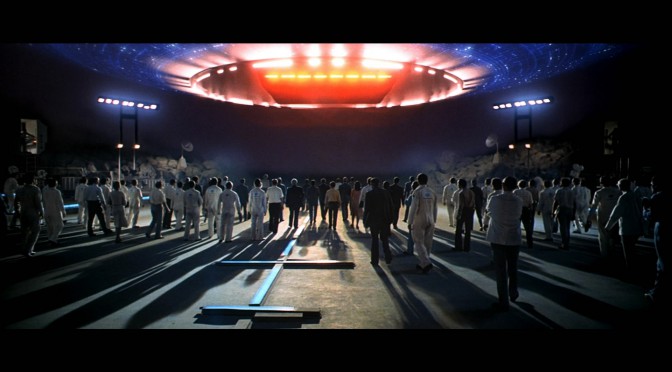
    Close Encounters of the What Now?

    Every film nerd has gaps in his knowledge. I, personally, have quite a few. I don’t really watch a lot of movies, and now that I live in Erfurt and the only cinema is German dubbed, it doesn’t look like that’ll change any time soon.

    There’s an upside to this. I can watch a lot of movies all of you have probably seen as a kid without the nostalgia – which, of course, is not really an upside to anything because we all know nostalgia generally makes movies awesome, but whatever!

    That’s what made me watch Spielberg’s Close Encounters of the Third Kind. For the first time. As a thirty year-old. And I’m wondering: What gives? I was bored throughout the entire thing, found the story to be incoherent and bloated and other than the pretty effects, didn’t find anything about the film entertaining at all.

    For a minute, I thought I might be broken. I might have finally grown out of Spielberg. But then I watched Jurassic Park and, no, I was pretty much all right.

    So what’s up with Close Encounters? Why does everyone like this movie so much? Explain! Did I miss anything in the weird characters or the cute kid or the mess at the end?

    I gotta know!

  • Cars. Guns. Women. Spectre?

    Cars. Guns. Women. Spectre?

    (Mathijs, you warned me!)

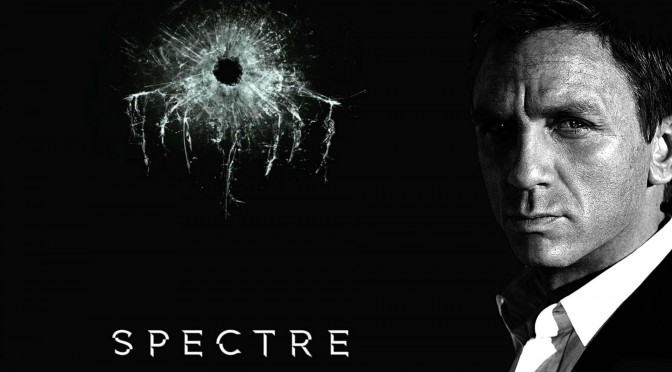
    SPECTRE.

    I had high hopes for SPECTRE. I mean, they capitalized the 24th Bond movie’s name and everything! That could only mean it would be awesome, right?

    I mean, come on. Just read that out loud.

    SPECTRE.

    Rawr.

    Only the thing is: SPECTRE is a disgrace – a low-effort Bond movie created by a director whose default mode of filmmaking is the shrug and an actor so cocky the interviews make it sound like he made this display of blandness entirely by himself.

    Capitalization tricked me. In what follows, SPECTRE will be refered to in a more fitting typesetting, spectre.


    Here’s a trailer because you might not know what a Bond movie is.
     

    spectre starts out incredible – an unbelievable long take featuring an elevator, a hotel room, a rooftop and, oh, just about a hundred extras dancing around a plaza in Mexico City. This sequence is amazing: Action! Humor! Sexy times! It’s all there.

    Then Sam Smith’s horrible falsetto theme song starts.

    After that, it’s about ninety minutes of typical cock-tease bond: spectre introduces Ralph Fiennes, the new M, but doesn’t do anything interesting with him. spectre introduces Andrew Scott, who plays C and previously played Moriarti on Sherlock, and doesn’t let him do anything interesting, either. Then finally, spectre introduces Christoph Waltz, the villain, and doesn’t let him do anything interesting, either. Monica Bellucci shows up, doesn’t do anything interesting other than sit on a bed in underwear, and to add insult to injury spectre‘s inane plot quickly throws her in the garbage for the much younger Lea Seydoux, who does super interesting things!! — but only when there’s no bad guys around. Cars are raced, but not very fast, Bond’s head gets drilled into, but not very deep, and big explosions follow small explosions for no reason because, shrug, spectre.

    Then, the credits roll, and lo and behold, no actor has done anything remotely interesting, safe for the overly cocky and at times scarily unlikable Craig and Ben Wishaw (Q), who’s transformed from sexy geek-chic to MI6’s closeted nerd who does all his top-secret development in an Austrian ski lift on a laptop that’s at least ten years old.

    Everything in this movie screams of low-effort. Interesting callbacks happen, but that’s all they are: Callbacks. Nothing interesting is done with the ominous white cat, with the mysterious organization that ties everything together – not even with the Bond girl, who can’t show her amazing qualities or ditto sideboob and is thus reduced to an insultingly bland blank slate. Sure, Bond objectifies women, and it’s kind of disgusting – but in spectre, the Bond girl ceases to be a woman in favor of a plot device whose only defining factor is that she, surprise, needs saving!

    Craig, Mendes, come see me after class, because I’m seriously disappointed in you.

    SERIOUSLY DISAPPOINTED.

    (And that’s how you use capitalization, hah!)

  • Nashorn in Galopp

    Nashorn in Galopp

    Hey everyone, especially everyone who loves to procrastinate!

    Office colleague and director Erik Schmitt has finally uploaded his award-winning short film, Nashorn in Galopp (Rhino Full Throttle), to YouTube!

    I remember my first time watching this short. I was fresh off the dffb boat and completely frustrated with German movies. German movies were dry, overrationalized pieces of shit with no self-reflection or emotion – and they weren’t exactly funny, either.

    For me, Nashorn in Galopp was a breath of fresh air in a dusty room: It’s self-aware, created with gut feeling – and it’s hilarious in its own special way. Erik is one of the few German directors I know who can strike the tender balance between being weird without losing track of the story’s strong, emotional core.

    And as a guy who had just graduated by putting a bunch of animated guys on top of a mirror, it taught me a simple lesson:

    Quit fucking whining about Germany.

    Watch the film here! It has English subtitles and comes highly recommended.

  • Why you should watch Inside Out

    Why you should watch Inside Out

    Pete Docter is my hero.

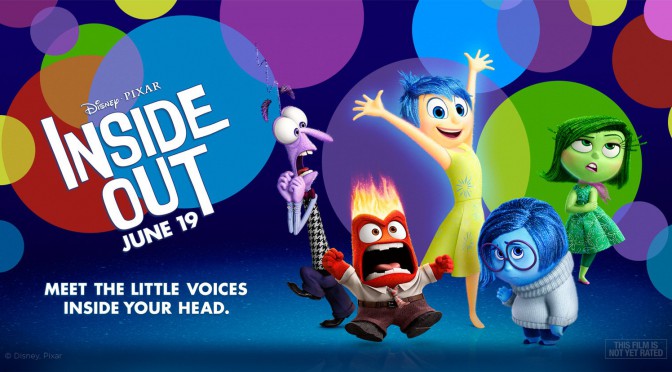
    If you’re reading this and you’re not into animation, you’re probably wondering if I suddenly got ill and got treatment by a back alley surgeon with a redneck name and mild dyslexia. If you are, you know Pete Docter is the Pixar genius behind the incredible Monsters Inc and UP. Both movies walk a tightrope between absurd and emotional and do it effortlessly and with style: Monsters Inc pits the absurd world of monsters against the realistic emotions of a toddler; UP features flying houses, talking dogs and the most heart-wrenching story about loss ever.

    So yeah, Docter’s my hero, and you will forgive me for having a tiny orgasm when he announced Inside Out – a movie in which we would be introduced to the emotions inside an eleven year-old’s head.

    Don’t know what I’m talking about? Here’s a trailer (along with my cold, cold shoulder):

    I watched Inside Out for the first time in Belgium back in May. It was brilliant, which made my heart sink, because that meant I had to write a blog post about it. I then proceeded to stare at an empty page for hours on end. This movie was so good, I didn’t know where to begin. And now, having seen it multiple times, I still don’t.

    Do I start with the fact that the entire movie theater burst into tears at the end every time I saw it? Or how elegantly a highly complex theme is introduced in the first ten minutes? Or how it switches between two worlds at the drop of a hat without ever being disorienting or confusing? Or about how little that trailer actually spoils about the actual movie (“Who’s your friend who likes to play?”)? Or how its climactic scene not only holds an emotional truth, but a developmental one, too?

    I could write essays about Inside Out. But because it’s a scientifically proven fact no one reads lengthy articles on the internet, I’ll just say this:

    Peter Docter is my hero. And after Inside Out, he’ll be yours, too.